
Storytelling has disappeared from most of our lives. Industrialisation, and then digitalisation have taken away the conditions that nurtured it: long, slow hours working in fields, kitchens, boats, gathered around looms or under trees in the evening – places where boredom can flower. Faith in eternity and the value and communicability of experience. In his essay 'The Storyteller', Walter Benjamin argues that "a man's knowledge or wisdom, but above all his real life – and this is the stuff stories are made of – first assumes transmissible form at the moment of his death." But in cities, the dead and dying are kept out of sight from the living, relegated to hospitals, sanatoria and mortuaries. That transmission no longer takes place. Ours is the age of fiction above all other kinds of literature. The death of the story brought the rise of the novel.
The time of fiction is that of an individual life. It has the sealed and finished quality, the timeless quality of an artefact. It is read in isolation, in obscure, intensely private communion with the author. The story, by contrast, is public. It is told to a group of people in the storyteller's company. It is not artifactual but organic, changing each time it is retold. It reaches far back in time across a long chain of lives and experiences and will be passed on into the future. It has a moral and assumes that life can be comprehensively grasped across the heterogeneous field of subjectivity, that our experience is both mutually communicable and useful.
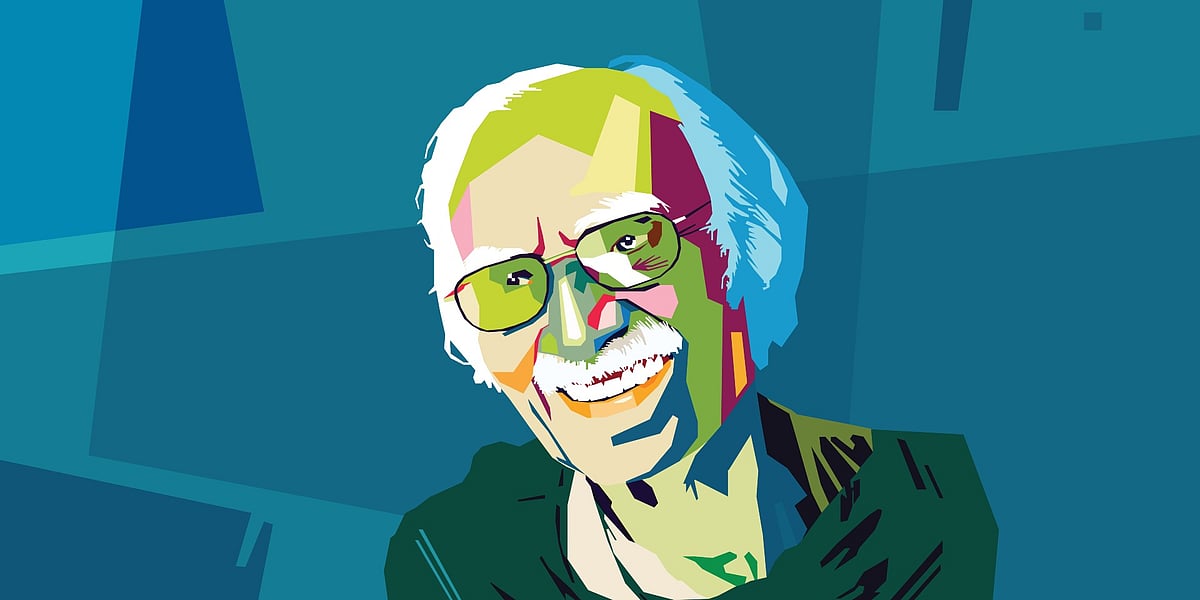
The writer Ki Rajanarayanan (Ki Ra), born in 1923 in the village of Idaiseval, Kovilpatti, died May 2021 in Puducherry, where he spent the latter part of his life as director of Puducherry University's Centre for Folklore Studies. He was cremated with state honours. Chief Minister MK Stalin said: "We have lost the greatest storyteller in Tamil." We can be more precise. We have lost a writer who showed an urban, bourgeois Tamil readership that folk stories not only retain their germinative power but that they can assume a new and particular beauty from the vantage point of loss. More than any other Tamil writer in recent times, Ki Ra showed us the wealth of Tamil Nadu's folk traditions.
Ki Ra began writing in a literary world still dominated by writing about the Brahmin middle class. Thi Janakiraman, with his stories of Brahmin families torn from their roots in pastoral Thanjavur and thrown into chaos (and sometimes intense pleasure) by the demands and freedoms of the city, is the most loved and emblematic of such writers. Though dialogue in Tamil fiction had long ceased to be written in the formal register, and even the film industry had given up the literary language it inherited from the stage in favour of spoken Tamil. Tamil literature still showed little recognition of the wealth and heterogeneity of the people's lives and language.