
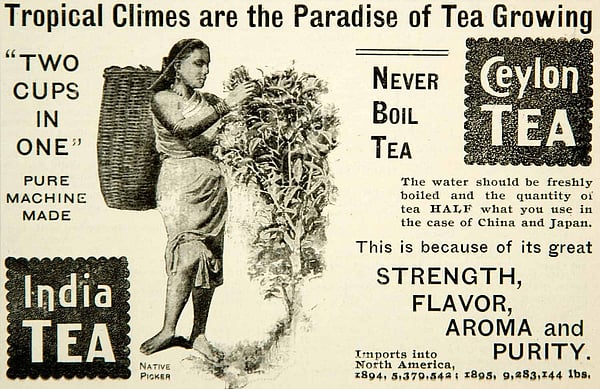
Ceylon tea might be distilled down to a popular image, a vision even, of vividly-attired Tamil women. Their nimble fingers sift through the parrot-green flush, effortlessly sweeping two-leaves-and-a-bud into wicker baskets to the rattle and shimmer of gold-and-glass bangles. Their faces are bright with toothy smiles, foreheads blessed with crimson kumkuma. Since the introduction of tea cultivation to the Subcontinent in the second half of the 19th century, visual renditions of women tea pluckers have circulated as widely as the leaves they tirelessly picked. Imprinted on ornate tins of Orange Pekoe to be steeped in bone china tea pots in polite London parlours, or in hand-coloured postcards exchanged between friends divided by oceans, these images have infused tea with a particular enchantment: a feminised mystique.
What is striking, however, is the persistence of such colonial imagery in marketing tropes across Southasia even today. The case in Sri Lanka is no different. Photographs of these women continue to feature in advertising not only for tea, but for luxury tourism and hospitality ventures which seek to market that imperial nostalgia for the strange terrains and peoples of faraway colonies. These invite tourists to relive the opulence of the Raj, as if centuries of conquest might be something one might casually revive. This reminds us of the enduring global inequalities between former rulers and subjects, and long histories of wealth drain. What is disconcerting, moreover, is how the picturesque commodification of colonial nostalgia – in both language and aesthetic – undermines the violence of Sri Lanka's colonial encounter, and the sustained exploitation of estate communities on the island.
The line room experience
In June 2018, a post on a social-media account expressed disgust at an 'experience' offered by Sri Lanka's famed Jetwing Hotels at its Warwick Gardens property in Nuwara Eliya District – one which, like many hospitality ventures based in Sri Lanka's hill country, promotes "colonial luxury". 'Meena Amma's Line Room Experience' was presented as one designed to immerse guests "into the lives of Sri Lanka's iconic tea pluckers" by way of two refurbished 'line rooms' – colonial-era accommodation for tea-estate workers that are known for their inhospitable living conditions. Jetwing's line rooms, the website noted, "feature an attached bathroom with hot and cold water, as well as a living space adorned with a vintage rocking chair to relax in view of the misty mountains". The "authentic local living" experience would permit guests to partake in the "simple pleasures" of the meals and "traditional activities characteristic of their lifestyle". Priced at USD 97 per night (LKR 15,500), a stay in Meena Amma's line room amounts to more than 20 days of a Sri Lankan tea plantation labourer's daily wages at LKR 730 (USD 4.50) a day.