
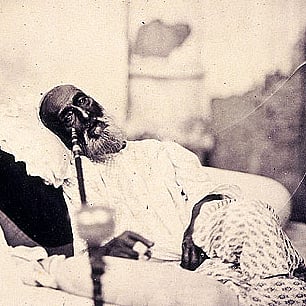
(An extract from Salil Tripathi's upcoming book, a collection of travel essays called Detours: Song of the open road, to be published by Tranquebar Press on 30 December 2015.)
I had one more place to visit – the final resting place of Bahadur Shah Zafar, the last Mughal emperor of India, who died as a British prisoner in Rangoon in 1862. Finding his tomb was not going to be easy, but I was determined to succeed.
How was I to find Zafar's resting place? When I asked my hotel concierge where I might find the tomb, he looked at me as if I was in the wrong country. Bahadur Shah's remains certainly were in the wrong country. Sha-Za-Fa, as many Burmese knew him, seemed elusive.
In India too, his name often appears as a footnote, an afterthought after the long line of illustrious predecessors who had spread their empire from Afghanistan to Bengal. By the time Bahadur Shah Zafar came to power, he was tired and old, with a dwindling treasury, no army, and his writ did not run much beyond the Red Fort. And yet, in the two decades he ruled, Delhi experienced what William Dalrymple, in The Last Mughal: The fall of a dynasty, called "the last great flickering of the Mughal lamp before it is extinguished."