
On a bus out of the coastal city of Vijayawada, in Andhra Pradesh, I passed small towns and villages whose names – opaque to me, as one who does not speak Telugu – I kept guessing at from a map. After years of drought, the monsoon had been bountiful, and we passed field after verdant field of cotton and pepper in an area infamous for its depleted water tables and crushing farmer debt. It took most of the morning, on three buses and an autorickshaw, to reach my destination: a village near the ruins of Nagarjunakonda.
A city flourished around 1800 years ago at Nagarjunakonda, the Hill of Nagarjuna. A great religious and education centre of both Hinduism and Buddhism, it was once part of the Satvahana Empire and then the capital of the Ikshvaku dynasty (AD 225-325), falling into terminal decline after the demise of the last Ikshvaku king. A schoolteacher, S Venkataramayya, discovered the ruins in 1926, though much of it now lies under one of the largest manmade lakes in the world, Nagarjuna Sagar, formed in 1960 by a massive dam across the Krishna River. Archaeological digs between 1926 and 1960 turned up finds from the early Stone Age to medieval times, spread over 130 sites across 24 sq km. Many structures were moved and reassembled on what is now an island in the lake, as well as on the lake's eastern bank at Anupu.
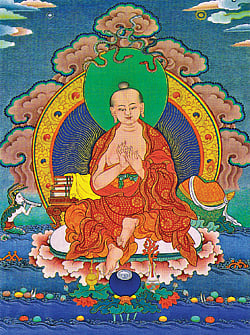
The island's modern name was inspired by one of its most illustrious citizens, Nagarjuna, a Buddhist monk-philosopher and founder of the 'Middle Path' school, who most likely lived there sometime during AD 150-250. Called by some 'the second Buddha', Nagarjuna's work is indispensable to several Buddhist schools, particularly Mahayana. 'Nagarjuna's philosophy represents something of a watershed not only in the history of Indian philosophy but in the history of philosophy as a whole,' says Douglas Berger, a scholar of Southasian thought, 'as it calls into question certain philosophical assumptions so easily resorted to in our attempt to understand the world.'
Exploring shunyata
Not much is conclusively known about Nagarjuna's life. Born into a Brahmin family, he later became a Buddhist. He likely spent many years at a centre of learning that later evolved into Nalanda University, in modern-day Bihar. Many scholars consider his exposition of the concept of shunyata ('emptiness') to be a critical achievement, central to a remarkable understanding of what it means to be human. He is best known for two Sanskrit works that have survived to this day, Madhyamika karika (Fundamental verses on the Middle Way) and Vigrahavyavartani (The end of disputes), which analyse the nature of reality, how we perceive it, and the basis of knowledge. His works should be thought of not only as a revival of the Buddha's views on such topics – which, at the time, were losing ground to rival views within both Buddhism and Brahminism – but also as their further development.