
(This is an essay from our March 2015 print quarterly, 'Labour and its discontents'. See more from the issue here.)
It is a fine, late-January morning in South Delhi. The city, after bearing the winter cold, is basking in the sun's warmth. On my way to the metro station, I encounter several groups of people, some hunched over a table outside a café, cigarette in hand, while others stand at a corner engrossed in discussions about the upcoming State Assembly elections, in which the resurgent Bharatiya Janata Party led by Prime Minister Modi faces Arvind Kejriwal's Aam Aadmi Party. The election issues range from development, electricity and water to the state of the under-class. Here and there, people are also heard talking about the mounting problem of Delhi's pollution levels.
The World Health Organization (WHO) recently ranked Delhi as the world's most polluted city. The government has rejected this ranking, saying that Delhi is not that dirty and that the levels of pollution are not as dangerous as claimed. The general populace blames the rise in transportation, rapid industrialisation, close proximity to the Thar Desert and Punjab and Haryana's rice fields for the poor air quality. Meanwhile, another problem, mostly ignored by the government, is escalating and is slowly transforming not only the city's breathing space but its demographics and economy.
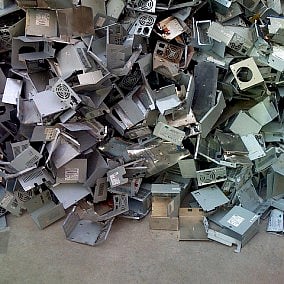
n August 2014, the Associated Chambers of Commerce and Industry of India (ASSOCHAM) published a report saying that the National Capital Region (NCR), which encompasses the territory of New Delhi and surrounding urban areas, is emerging as the world's e-waste dumping yard. It is likely to generate 95,000 metric tonnes per annum by 2017, from the current 55,000 metric tonnes per annum. The report went on to say that 35,000 to 45,000 children, aged between 10 and 14, have been engaging in various e-waste activities in Delhi's yards and workshops, without adequate health protection.