
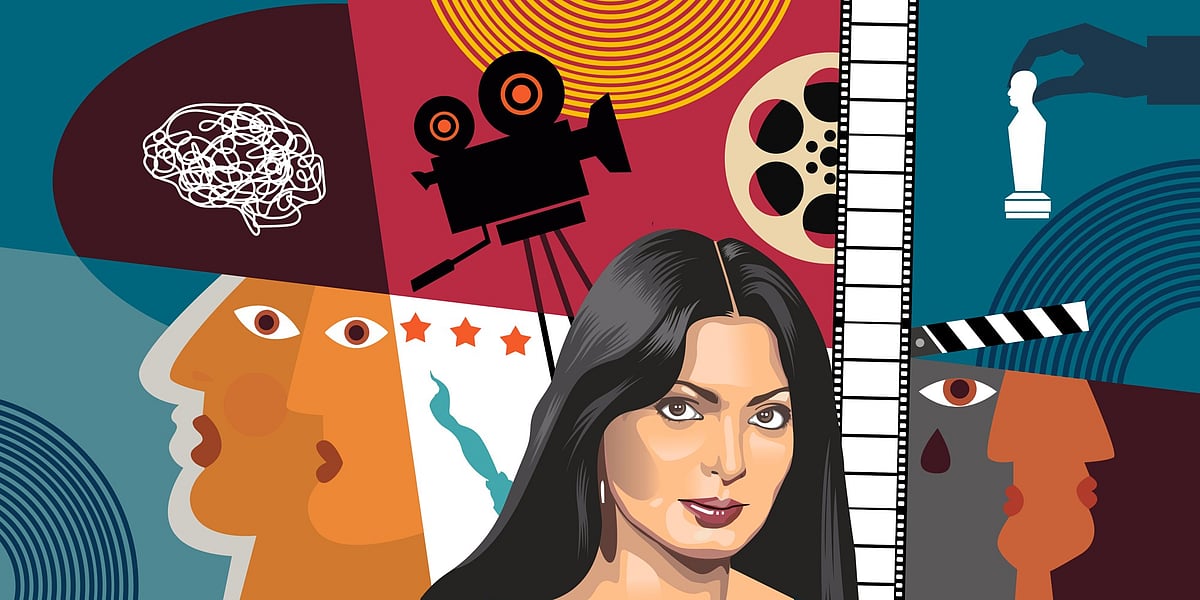
What feels like a chunk of my childhood was spent in complete awe of her. Parveen Babi.
Growing up in West Asia of the 1980s, renting Hindi film VCRs at the corner store was a hugely desi predilection: nostalgia and heartache and the stuff of phone calls/dinner party chatter for my parents, and a vision of an India for me, a country that I knew was home, real home, even though I had no real memories of it since I'd left at the age of two. Plonked in the middle of a desert, in an air-conditioned room, in front of a TV that played her movies as if on loop, I was enthralled.
Shaan. Mahaan. Namak Halaal. Amar Akbar Anthony. Do aur Do Paanch. Deewar. Jaani Dost. Rang Birangi. Parveen would shine – at times literally – in movie after movie, and I'd watch them all, mesmerised by her beauty, her larger-than-life aura, her ability to command your undivided attention each time she was on screen. I'd rewind her songs and scenes – the omelette one in Kaalia, Pyaar Karne Wale in Shaan, Jawaane Jaaneman in Namak Halaal, the scene where she'd stretch and turn in black leotards, her straight black hair shimmering, her face radiant, Yeh Din Toh Aata Hai in Mahaan. She could be really funny, an absolute riot; and she could be all flashing-eyes dramatic. Her screen presence exuded unparalleled magnetism, such that she held her own across all the multiple multi starrers she was part of (including one with the reigning superstar Amitabh Bachchan in a triple role). I duly devoured it all over family-time weekends, my parents placing international calls back home during songs that seldom affected plotlines.
Parveen Babi, to me, was nothing short of electric. A vision of India for me who was a vision to behold.