
(This article is part of our special series 'Rethinking Bangladesh'. You can read the editorial note to the series here.)
Bangladesh is now officially scheduled to be classified as a developing country in 2026. The United Nations General Assembly at its 76th session adopted a historic resolution to graduate the country from the least-developed stage to the developing stage. This recognition of development came when the country was preparing to celebrate the golden jubilee of its independence. While power generation and supply are considered the driving factors behind this development process, the country's development journey is not above criticism.
Environmentally harmful fossil fuels have been the main source of power generation in Bangladesh: almost two-thirds of the country's power production depends on natural gas, while the rest comes from coal, liquid fuel and hydropower. The Power System Master Plan (PSMP) adopted in 2016 indicates a growing dependency on fossil fuels in the coming days, which contradicts the global call to "consign coal power to history" to keep the 1.5-degree-Celsius target within reach. It is also inconsistent with the pledges Bangladesh made as a signatory of the Paris Accords, as a leader of the Climate Vulnerable Forum (CVF), and as a proponent of the Mujib Climate Prosperity Plan (MCCP) to the global community at the 26th United Nations Climate Change Conference (COP26).
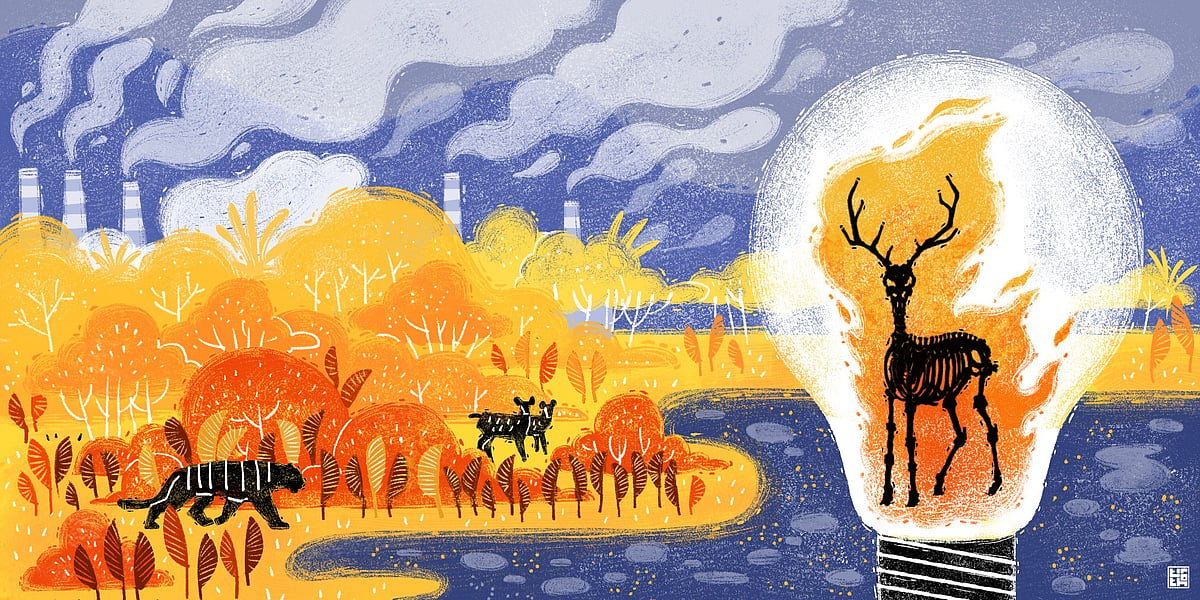
Adjacent to the Sundarban, the world's largest mangrove forest, the Rampal coal-fired power plant symbolises the future of power generation in Bangladesh. It is a joint venture between India's National Thermal Power Corporation (NTPC) and Bangladesh Power Development Board (BPDM) being built by Bangladesh India Friendship Power Company (BIFPC). The power plant has been receiving resistance from national and international environmental activists and experts, who claim that the use of coal will destroy the biodiversity of the forest as well as traditional livelihoods of the millions of local communities dependent on the natural resources of the forest for their survival. Yet, environmental activism does not go without consequences in Bangladesh, a country under a 'hybrid regime'. Threats and intimidation, physical assaults and imprisonments have become common mechanisms to control environmental activism in the country.