
The Naga movement has come a long way. The oldest armed struggle in the Subcontinent has not only sustained itself over the course of some six decades, but has also inspired and aided many regional nationalities on the path of insurrection. The modern history of the Nagas is one of both military and human-rights concern. Many lives have been lost; yet even today the movement persists.
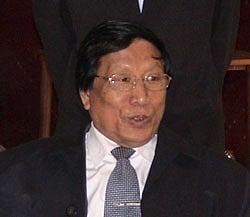
With an unresolved future, there is currently fear and uncertainty among the civilians impacted upon by the movement, despite the fact that the National Socialist Council of Nagalim, Isak-Muivah (NSCN-IM) and the Indian government have been conducting talks since the ceasefire of 1997. Thuingaleng Muivah, 73, the general secretary of the NSCN (IM), recently in Delhi, spoke with Kekhrie Yhome to reminisce about his war experiences and current hopes. The interview was conducted in English.
KY: How would you justify choosing to articulate the Nagas' desire through the language of violence and military action?
TM: The Nagas could understand the danger of being suppressed. To the Nagas, freedom is more important than anything else. Freedom, for the Nagas, means that they themselves would decide their fate. This is the most decisive issue for every nation. When that freedom is given up, the Nagas know that their rights of existence are gone forever. Mahatma Gandhi, the father of the Indian nation, was approached by the Naga leaders in 1947, and he said, "Nagas have every right to be independent." The Nagas declared their independence on 14 August 1947, one day ahead of India's declaration of independence.