
For many years now, I have regularly received calls from the immigration offices of various countries asking me to verify if an asylum applicant is Tibetan or not. This requires me to speak with the person on the phone and then inform the immigration officials whether the applicant seems to be 'genuine'. Recently, I was asked to interview a young man who was caught trying to enter the US at the US-Mexico border. After being detained by border authorities, the man informed them that he was a Tibetan escaping Chinese persecution and wanted to seek asylum in the US. The immigration officials needed to know if the person was legitimately Tibetan. On the phone, the claimant repeated a story I've heard many times – that he or she had been helped by a good Samaritan whose name and whereabouts were unknown, or that the family sold a priceless gem to pay human-traffickers to enable him or her to flee to safety.
Over the past two decades, Tibetans have been experiencing large-scale international migration for the first time. Although Tibetans have always engaged in migration of sorts, in the past their ambit of movement had been limited to Southasia. Even during the initial flow of refugees across the Himalaya in 1959 there was very little urge to migrate beyond India and Nepal. Like most refugees, the loss of the homeland was seen as temporary, and a return was believed to be a matter of time. But the situation has changed after six decades of statelessness in the Subcontinent: Tibetans are moving and North America has become the desired and coveted destination. They have joined a 'global flow' of people making the journey to new destinations through both legal and irregular means. The rush to migrate began in the year 1990, when the US Congress approved the resettlement of 1000 Tibetans, who then applied to bring family members to the country. Almost overnight, the size of the Tibetan population in the US swelled from a few hundred to several thousand.
There are no reliable statistics on the number of Tibetans living in the US and Canada, but my impression is that it is now well over 20,000. Because of the high visibility of Tibetans in the Western media, it is often assumed there are many more Tibetans in North America than the actual number. Even those who have sought asylum are hard to count: because Tibet is not recognised as a country, the Tibetan claimants are classed as having Chinese nationality, meaning that the data is buried.
Homelands
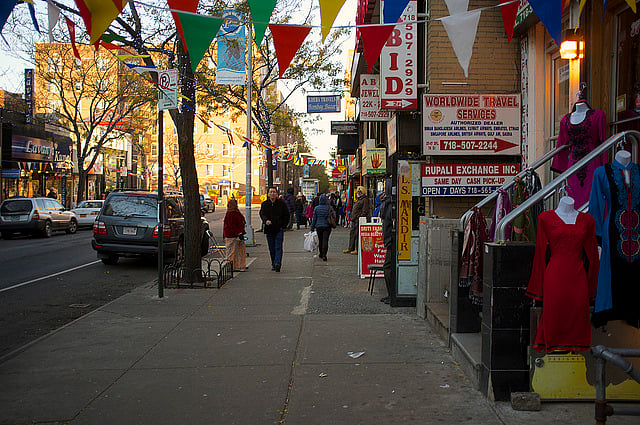
Almost all of the Tibetans in North America have come from Nepal or India over the past two decades. They arrive as single men or women, and, once established and their status legalised, they bring their families to join them. Today, in places like Toronto and New York, we find small enclaves with concentrated Tibetan communities. In Jackson Heights, an area within the borough of Queens in New York, or in the Parkdale neighborhood of Toronto in Canada, it is not uncommon to see groups of Tibetans gathering in cafes and eateries. In these areas, Tibetan restaurants are common and Tibetan voices can be heard on the streets and on public transport.