
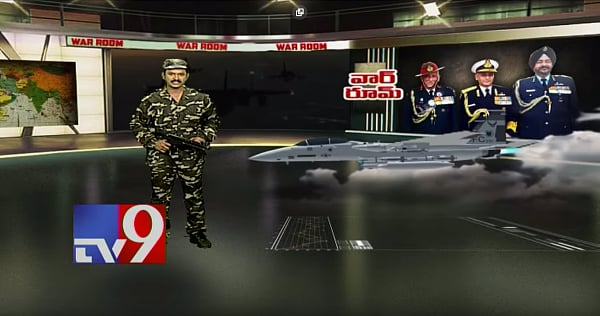
The weeks since 14 February 2019 – when a Kashmiri youth rammed an explosives-laden vehicle into a 78-vehicle convoy carrying about 2500 troops of the Central Reserve Police Force (CRPF) in India-administered Kashmir – followed by the Indian Air Force's strikes twelve days later, have been characterised by a strategic silence from the Indian state. It has, therefore, been conveniently left to the country's shrill, ultranationalist media to whip up hysteria, with its call for retribution and war with Pakistan, and the relentless propaganda masquerading as 'news'.
What has been at a premium is not just good journalism, exhibited through scrutiny over information doled out by 'sources', but basic investigation and truth-seeking. To begin with, as the media was barred from the site of the suicide attack, the scanty official information resulted in speculative headlines and imprecise news reports. For example, the death toll of the CRPF personnel varied (from 40 to 49) even days after the attack, as did the make of the vehicle that rammed into the convoy, and the nature and weight of the explosive used. When reporting of the basic facts was speculative, could the media be relied upon to investigate more complex aspects of the attack and its aftermath? In any conflict, a credible media that puts aside its nationalism is a reliable counter to propaganda from all sides. However, more often than not, Indian media seems not to have risen to the occasion.
Megaphone for the state
The media, for the most part, did not ask hard questions in the immediate aftermath of the blast. For example, what came of the intelligence inputs from the Kashmir Police, reportedly sent a week before the attack, on 8 February, to the CRPF, the Border Security Force (BSF), the Indo-Tibetan Border Police (ITBP), the Army and the Air Force, warning them of the use of IEDs in a possible terror attack by the Jaish-e-Mohammed (JeM)? Was the route properly sanitised and why were the soldiers not airlifted given the risk of potential attacks? And why was Adil Ahmad Dar, the suicide bomber, reportedly picked up several times in the past two years and then let go?