
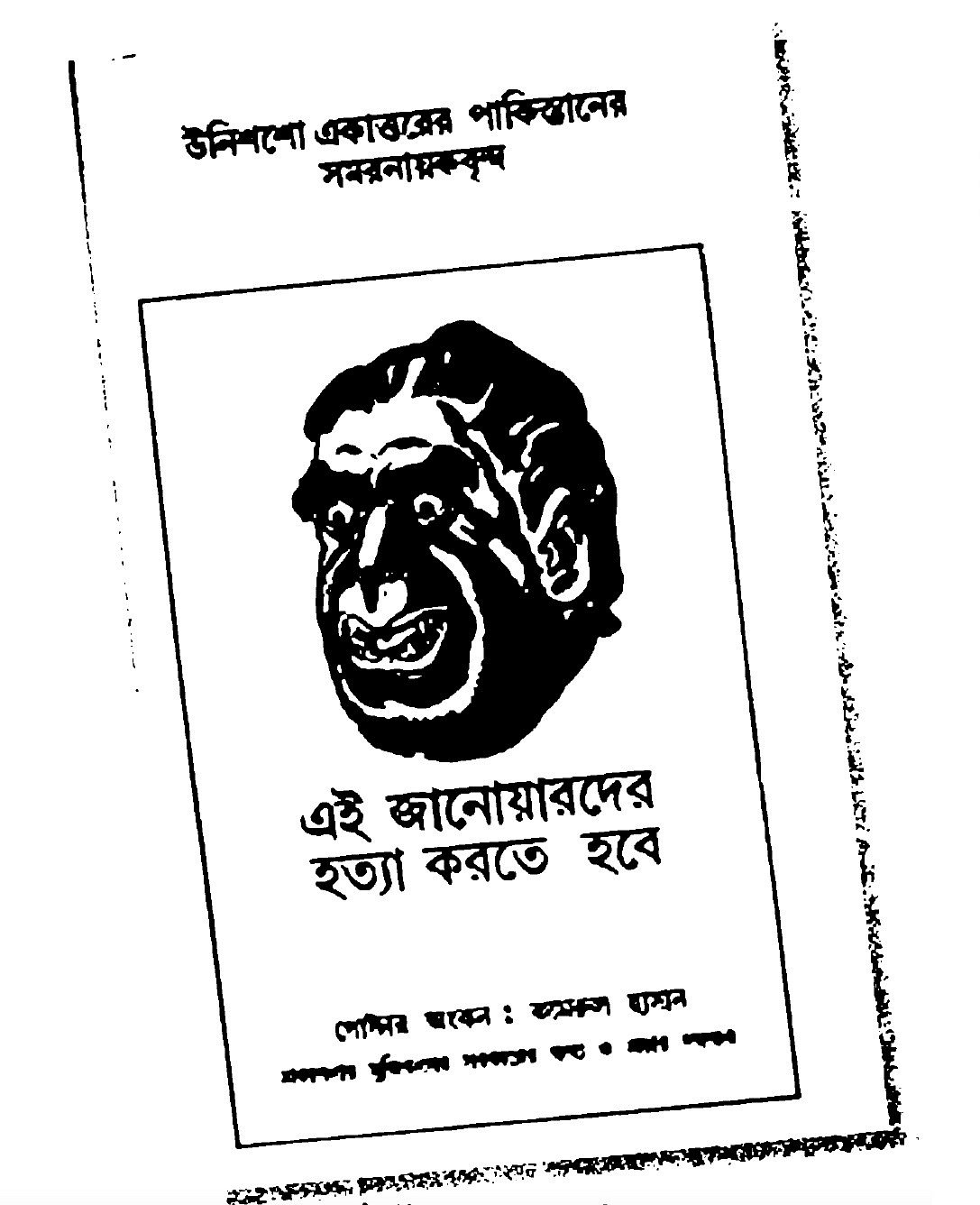
Bangladesh declared its birth on 16 December 1971 – now celebrated as Victory Day, a day of reminiscence for citizens of the new nation. But many memories are troubling, especially those of the 'war babies' – children born during or after the War of Liberation, as a result of the often-planned and systematic rape of Bangladeshi women. If we turn back the pages of Bangladesh's history, we can get some rare glimpses of the marginalised; but there is still complete silence when it comes to the babies of war.
The nine months of armed conflict that resulted in East Pakistan breaking away to become an independent Bangladesh is a story of blood and tears. Official and unofficial estimates of deaths range widely between 300,000 and three million. In addition to mass killings, a large number of Bangladeshi women were subjected to sexual violence; the official figure is some 200,000. While Pakistan has not been immune from the trauma of war, its government has repeatedly denied the allegations of genocide in East Pakistan/Bangladesh. Some recent sceptics have also questioned the numbers both of people killed and of women raped.
How do we know that targeting women in this manner was a deliberate strategy on the part of the Pakistan Army? An article in the Dawn published on 22 March 2002 quotes Yahya Khan on the matter. As president, Yahya had directly ordered the army crackdown on East Pakistan in 1971. While talking to a small group of journalists in Jessore, in southwest Bangladesh, he was pointed towards a Bengali crowd that had assembled on the fringes of the airport. According to the article's account, he said, in Urdu, "Pehle inko Mussalman karo" (First, make them Muslim). This anecdote is significant, for it demonstrates that at the senior-most level of the Pakistan Army there was a perception that Bengalis were not loyal Muslims. These perceptions also fed into two other stereotypes: that Bengalis were not patriotic Pakistanis, and they were too close to Hindu India.
This complex relationship among the three countries can be traced through the bitter Partition memories of abduction, the rape of thousands of women and children, and the 'train incidents' in which passengers of one community or the other were murdered en masse. The tragedy of the mass exodus in 1947 has shaped India's and Pakistan's stances towards each other, and East Pakistan became a significant pawn in this rivalry. From the beginning, Pakistan held India responsible for the Bangla national movement; in the process, it overlooked the growing discontent of the people of East Pakistan due to economic and political inequality with West Pakistan, and underestimated the people's power. The leadership in Islamabad had always considered Bengalis to be not only weak and powerless, but Hinduani – too close to Hindu religious and cultural practices. As such, for Pakistan, Bengalis/East Pakistanis needed to be purged off this Hindu-ness.