
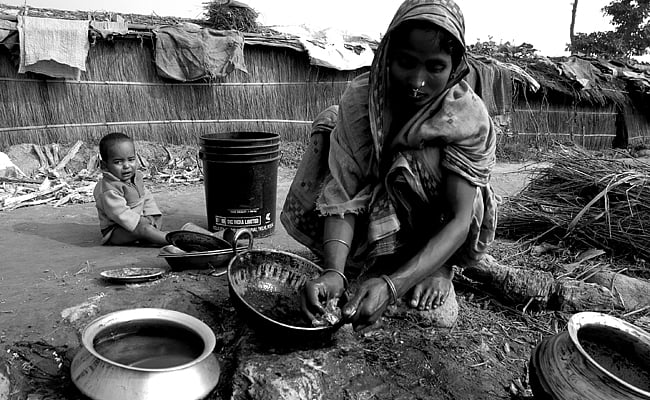
The Bodo-inhabited Kokrajhar district in western Assam was tense from early July, when two Bengali-speaking Muslim men were found murdered. Two more were killed on 19 July. The next day, four former cadres of the Bodo Liberation Tigers were found dead in a Muslim-majority village in the district. No one knows who killed them, but anti-Muslim attacks spread quickly, killing over 60 people. Taking advantage of the situation, some fundamentalist forces turned it into propaganda against Bangladeshi immigrants. In the ensuing chaos, several villages inhabited by both the Bodo and Muslims were burnt down, and some 400,000 people are displaced to refugee camps in Kokrajhar, Chirang and Dhubri districts. And the killing, although now sporadic, continues, with three more casualties reported today.
Such ethnic conflicts are not new in the Bodo territory of Assam. In the 1990s, while signing an accord with the Bodo militant outfit to create the Bodo Autonomous Council, the Government of Assam excluded from the council over 1000 villages where the Bodo were not a majority. Efforts to 'create' Bodo majorities in those areas resulted in attacks on Bengali-speaking Muslims in 1993, on Bengali-speaking Hindus in 1995, and on ethnic Santhals in 1996. As a result, around 350,000 people were internally displaced and hundreds of people killed.
Based on instances such as these, many conclude that Assam – indeed the whole of the Indian Northeast – is a land of 'terrorists' and perpetual conflicts. In 1958, on the pretext of that notion, the Government of India imposed the Armed Forces (Special Powers) Act (AFSPA) on the Northeast. The Act, which is still in effect, gives extraordinary powers to the armed forces; for example, a junior commissioned officer may arrest a person on mere suspicion of planning a terrorist act. If the arrested person dies in army custody, he or she will be declared a 'terrorist' killed while on the run. Meanwhile, security personnel are protected from prosecution. In effect, the Act turns complex conflicts purely into an issue of law and order. In reality, however, issues of immigration, land and identity are behind the ethnic violence in the region.
Immigration from Bangladesh to Assam is not a recent phenomenon, and Bangladeshi Muslims are not the only immigrant population in Assam. The first wave of immigration began in mid-19th century after the British East India Company and the zamindars of Bengal signed the Permanent Settlement Act of 1793, which granted the feudal lords absolute proprietorship over their lands at a fixed tax rate. Soon afterwards, hundreds of peasants rendered landless and impoverished in Jharkhand, Chhattisgarh and Orissa, and other areas which were then part of the Bengal Presidency were brought to Assam to work as indentured labourers in tea gardens. The second wave of immigration began in 1891 when the British regime encouraged peasants in the erstwhile East Bengal to cultivate what they called the 'wasteland' in western Assam so that the Company could collect more revenue by getting the peasants to grow more food.