
Cyclone Nargis was unique. It hit Burma's main population corridor with an intensity that few had prepared for. Since it blew across southern Burma in May 2008, killing nearly 139,000 people and displacing hundreds of thousands, efforts to improve disaster preparedness in the country have largely been top-down. The material situation and attitude on the ground has barely changed. A complex confluence of economic, political and environmental reasons has prevented the efficient formulation of disaster-preparedness policy and its implementation.
In Yangon, for example, unrestrained growth has set back safety standards. Although in the immediate aftermath of the cyclone the city had showed tremendous resilience in bouncing back, it has since repeated many of the same mistakes, such as the lack of long-term planning and under-funded enforcement.
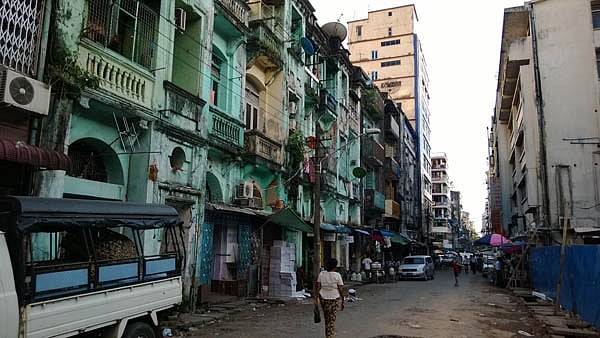
A commercial port city in a largely agrarian country, Yangon is home to over a tenth of Burma's population, its large industries and popular culture. More liberal, cosmopolitan and less representative of the country than Mandalay, it continues to hold onto many of the trappings of its 120-year-long colonial past. In 2011, after the military government gave way to a nominally civilian leadership, Yangon's economy kicked off, as foreign loans, workers and construction materials began to flow in. The hermit state suddenly became the latest darling of speculative investors. A country where Coke used to be smuggled in, Burma saw a deluge of foreign cars and consumer goods, Singaporean-run skyscrapers and gated communities.
Once the capital, Yangon still dominates the country. It is the largest city by far, and its population of over 5.2 million is expected to increase in the next 15 years, as job opportunities in the industrial base, held back for so many decades, begins to grow. More than the cyclone, it is this influx of investment, and the developments that have followed, which is changing the city's layout and ability to respond to a disaster.