
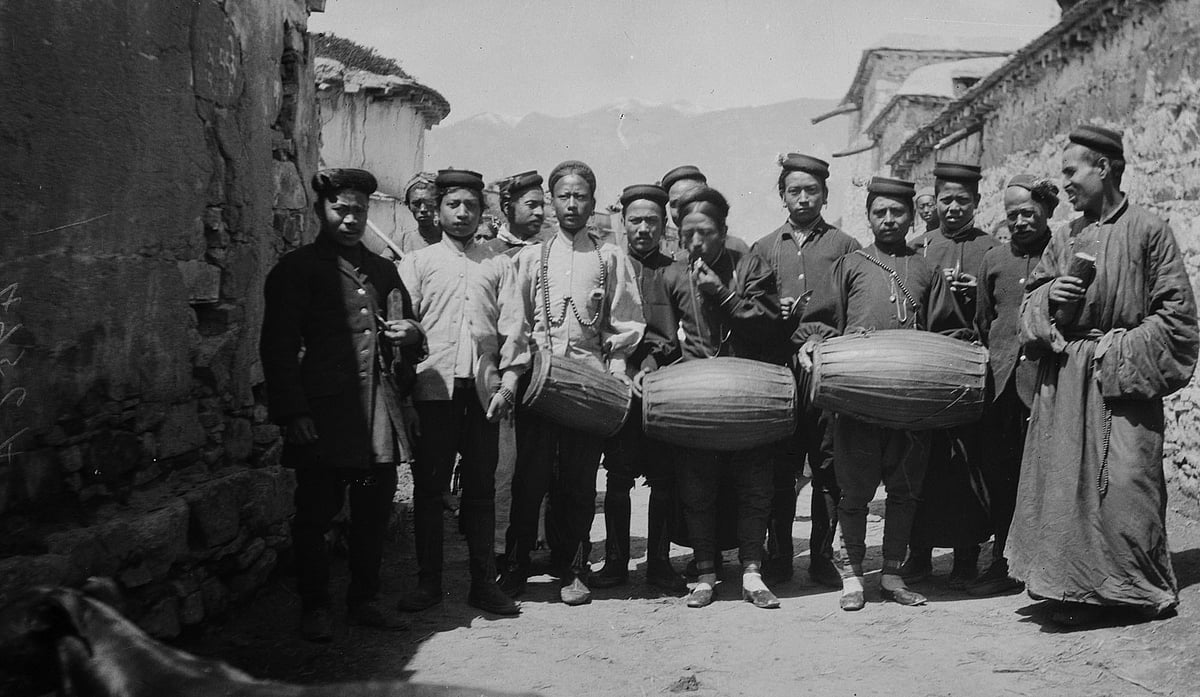
Does music lose its identity when traditional instruments are replaced by modern ones? Or are musical ideas more important?
While music lovers and musicians may find no difficulty in recognising Nepali music when they hear it, asking them to define it more often than not results in a confused reply. This is not surprising, since a satisfactory definition of Nepali music would have to consider the many sources of musical ideas that are, and have been, available to Nepali composers.
No account of Nepal's art can fail to acknowledge the debt it owes to the diversity among its 19 million people of some 32 ethnic groups, who speak variants of 56 languages and dialects of Indo-Aryan, Austro-Asiatic, Tibeto-Burman and Dravidian origin. In addition, the three primary religions that underlie Nepali thought and ways of life— Hinduism, Buddhism and Animism— are intrinsic to the development of Nepali art forms. The assimilation of themes they have inspired is apparent in stone and wood carvings, metal sculptures, thanka paintings, mandala drawings and architectural designs. Music, dance and drama are Tooted in these religions conceptually, metaphysically and in theft theoretical development. Hinduism´s conceptualisation of sangeet (music) is elaborate, hi its fundamental form, sangeet denotes vocal music, instrumental music and dance. But, conceptually, it further pertains to paintings and sculpture. A passage from the Natya Shasktra, written around the Third Century BC, highlights this interrelationship between the art forms.
A king, wishing to learn how to sculpt likenesses of the gods, consulted a sage for instruction. "You will have to learn the laws of painting before you can understand the laws of sculpture", the sage advised. "Then", said the king, "teach me the laws of painting". "It is not possible to understand the laws of painting", replied the sage, "without learning the art of dance". "So teach me the art of dance", the king requested. "That will be difficult" said the sage, "as you do not know the principles of instrumental music" .The king, by now, was growing impatient. "Then why don't you teach me instrumental music?", he demanded hastily. "But you cannot understand instrumental music", answered the sage, "without a thorough study of vocal music, for vocal music is the source of all Art.