
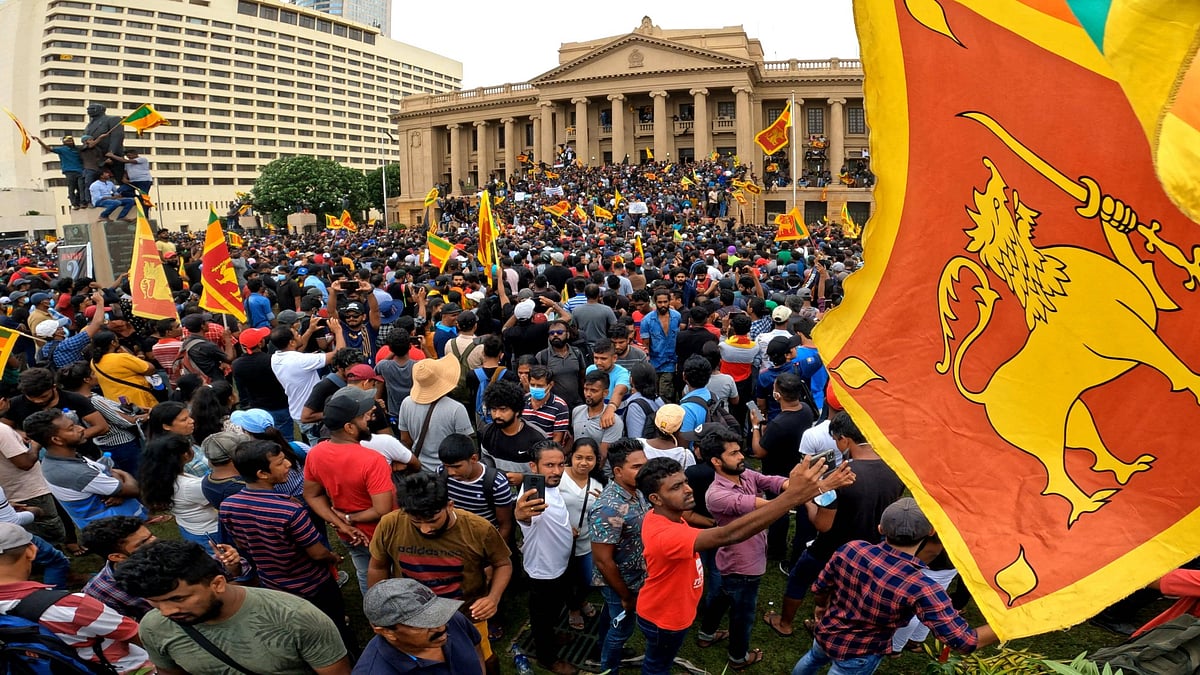
On 9 July 2022, an unprecedented number of Sri Lankan protesters marched to Fort in Colombo, where the president's official residence and the Presidential Secretariat is located. Their principal demand was President Gotabaya Rajapaksa's immediate resignation for his role in causing the devastating economic crisis. Protesters have also called for the resignation of Prime Minister Ranil Wickremesinghe, who remains deeply unpopular and is seen by some as protecting Rajapaksa's interests. Despite vicious retaliation by law enforcement and security forces, the protesters stormed both premises as well as the prime minister's official residence nearby. In the face of such enormous pressure, and for the first time since island-wide protests began over one hundred days ago, the president signalled an intent to resign. After initial refusal, the prime minister too has indicated plans to step down, although the outcome likely depends on negotiations between major political parties.
What happens if President Rajapaksa does in fact resign? The process is governed by Article 40 of the Constitution and the Presidential Elections (Special Provisions) Act of 1981 (the 'Act'). To begin with, it is Parliament and not the people that elects Sri Lanka's next president. Article 40(1)(a) of the Constitution and Section 3(1) of the Act provide that Parliament shall elect one of its members to the office of president. That election must take place within one month from the date of the vacancy. The new president will then serve the remainder of the current presidential term, which ends in 2024. The entire process, if followed properly, and in good faith, is straightforward. It can be explained in five steps.
The first step is taken in the immediate aftermath of a resignation. The Constitution provides that the prime minister (or the speaker if there is a vacancy in the office of prime minister) shall act in the office of president. This appointment is automatic and lasts only until a new president is elected by Parliament.
The second step involves the secretary general of Parliament, a presidential appointee who is the chief administrative official of the house. Once the president resigns, Parliament must be summoned to meet within three days of the vacancy. The secretary general must inform the members of Parliament of the date and time fixed for such a meeting. Although it is not always practical to place a mandatory duty on Parliament to do anything within a specific period, the process places a very clear statutory responsibility on the secretary general – a duty that may be enforced via a fundamental rights application to the Supreme Court.