
The city is fine, really. Right outside the railway station, beneath the board that says Asansol Junction, an LED panel displays the day's air quality. Mostly, it reads 'moderately polluted' or 'poor' through the summer and monsoon months, and 'very poor' through the winters, but never 'severe'. This seems like an achievement: Asansol, West Bengal's second-largest city and my hometown, was categorised as one of the 43 'critically polluted' industrial areas in India by the Union Ministry of Environment and Forest in 2009. In subsequent years, a number of efforts were put in place to curb pollution, including a brief ban on setting up new industries. All plants and factories were also required to install pollution-control devices and keep emissions within permissible limits.
Available data suggests these efforts had an impact. Asansol's score as per the Comprehensive Environmental Pollution Index (CEPI) – which measures air, water and land pollution on a scale of 0-100 and has been used since 2009 to measure environmental quality – improved significantly over the past decade. Asansol's CEPI score dropped from 70+ in 2009 and 2011 (i.e. a critically polluted area) to 55.03 in 2018, indicating less than severe levels of pollution. (Asansol's MP Babul Supriyo is also the union minister of state for environment, forest and climate change).
But it is only when you travel outside the city, along the numerous roads that lead into massive collieries within the Asansol Durgapur Development Area – spread over 1603 square kilometres, it comprises two municipal corporations, three municipalities and eight community development blocks – that you begin to see how mining is rupturing local ecology and causing irreparable damage to the environment. Long before you see the huge mounds of overburden (the term used to describe the rock, soil and other material lying above a coal seam, which must be removed before surface mining) from open-cast coal mines, you notice coats of dust and fly ash, produced by the burning of powdered coal, on everything in sight. The land, covered with dense forests till the 1980s, is mostly barren, dotted with innumerable brick kilns that are gobbling up all the topsoil around them, leaving behind pools of stagnant, putrid water.
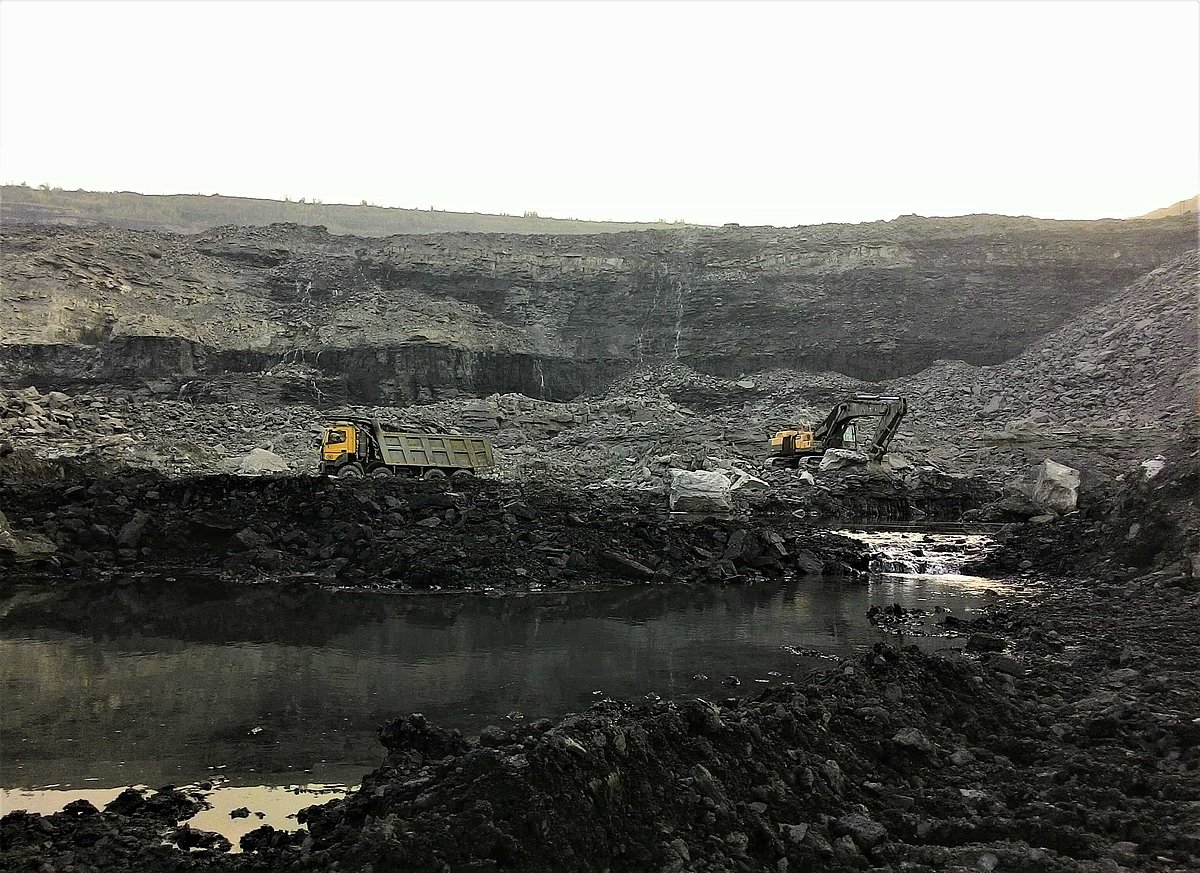
The open-cast mines began springing up in large numbers starting in the 1980s, according to residents and environmentalists from the area. A couple of them resemble hill stations, with plateaus and peaks of varying heights and levels. Streams gush from prised-out rock seams, flowing through makeshift valleys and inundating coal beds being worked on by backhoes and bulldozers. Surely this is environmental degradation – there's loss of forest cover and biodiversity, destruction of natural aquifers, depletion of groundwater resources, degeneration of topsoil from overburden runoffs and more.