
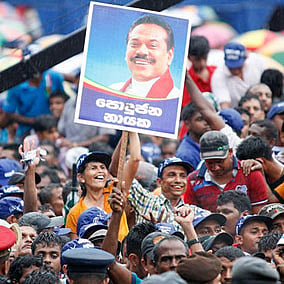
Six months ago, Sri Lanka stunned the world, and itself, by unseating the country's neo-monarchical president without firing a single shot, by voting out Mahinda Rajapaksa in the democratic presidential elections. Barely seven months later, however, as the country heads to the parliamentary polls set for 17 August, the contest appears to be revisiting the same playing field with the same players, which many had hoped had been put behind them.
On 8 January 2015, Sri Lankans turned out in unprecedented numbers to vote in a premature presidential election called by Mahinda Rajapaksa, who, together with his brothers had ruled the country with an iron fist for over nine years. As the initial results began to trickle in, indicating a clear victory for the joint opposition and its candidate Maithripala Sirisena, wild rumours about an impending Rajapaksa coup began to circulate. The possibility that the Rajapaksas would depart peacefully seemed unthinkable, to foes and friends alike.
But the unthinkable happened. Long before all the results were in, Mahinda Rajapaksa conceded defeat and left for his private residence in the southernmost district of Hambantota. Within hours, victorious candidate Maithripala Sirisena was sworn in as Sri Lanka's new president on 9 January, supported by a coalition that included the United National Party (UNP), even as support within his own party, the Sri Lanka Freedom Party (SLFP), remained divided with a large section still in support of Rajapaksa.
The transfer of power was complete when, a few days later, Rajapaksa resigned as the president of the former ruling coalition United People's Freedom Alliance (UPFA) and its main constituent party, the SLFP. Sirisena, who before his sudden defection to the opposition in November 2014 had been the general secretary of the SLFP and a minister in Rajapaksa's cabinet, was unanimously chosen as leader of both organisations.