
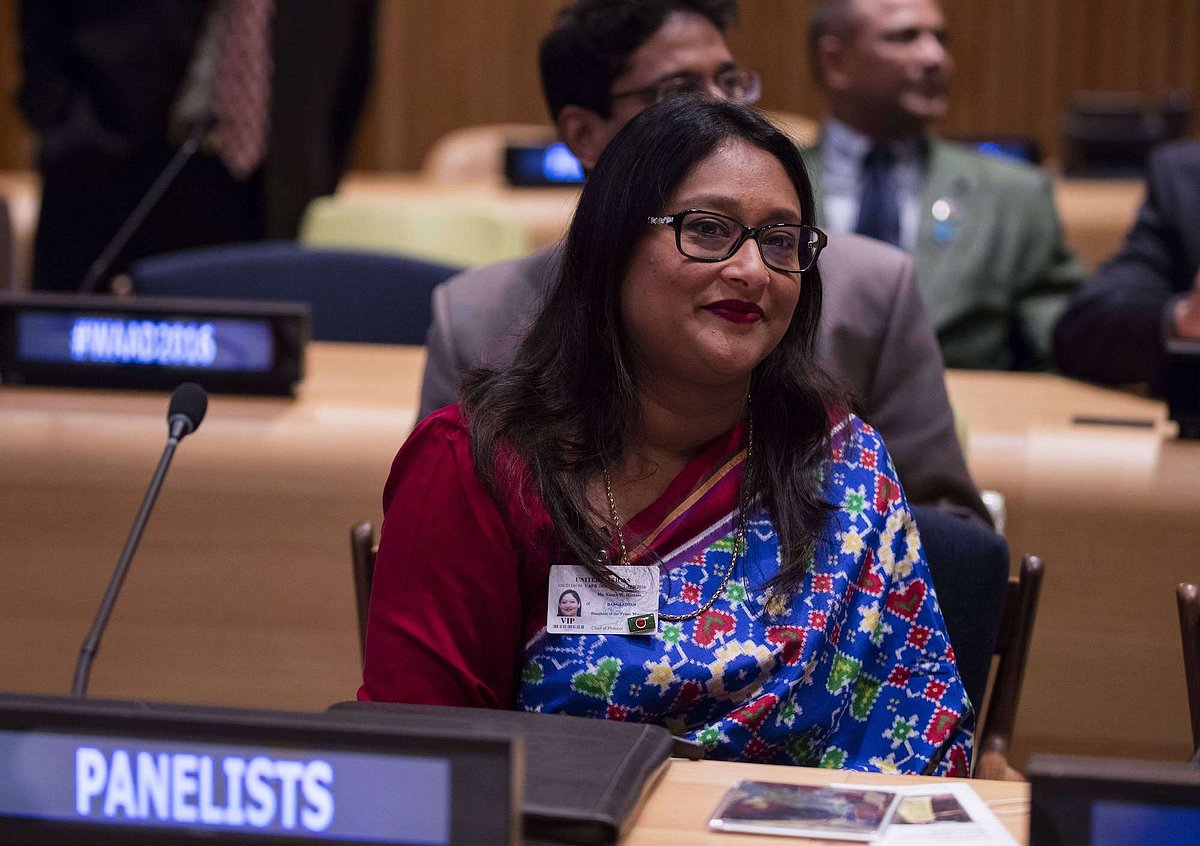
The two candidates vying to be the next regional director of the World Health Organisation South-East Asia Region (WHO-SEARO) are being described as chalk and cheese. One is Nepal's nominee, Shambhu Prasad Acharya, a public-health veteran with a doctorate in the discipline who has spent three decades holding various posts within the WHO. The other is Bangladesh's nominee, Saima Wazed, a clinical psychologist and the daughter of the country's prime minister, Sheikh Hasina. Wazed has no degree in public health though she was given an honorary doctorate by a university in Bangladesh in March 2023 and is currently pursuing an advanced degree in education and organisational leadership. She has been on the WHO's advisory panels on autism and mental health and been associated with global health programmes at the British think tank Chatham House since 2022. Her resume shows a focus on psychology and autism but little experience within any other health subjects. Her leadership experience is restricted to a small non-governmental organisation that she founded and roles on advisory boards under a government run by her mother. Wazed also holds a second citizenship from Canada.
Wazed's candidacy has raised uncomfortable questions in the international public-health community and sections of the media about potential nepotism in the WHO's election process, which was already under scrutiny for lack of transparency. In September, the highly respected medical journal The Lancet published a critical story drawing attention to Wazed's limited experience in public health and high-level leadership. It also carried an editorial raising concerns about the integrity of the WHO's regional offices, noting that in the South-East Asia region "one candidate is the daughter of the nominating country's Prime Minister." The editorial added: "These concerns threaten to delegitimise both the election process and the future credibility of elected WHO Regional Directors." The Lancet's red flags showed just how worrying Wazed's nomination is to the global public-health and medical community. Her candidacy has also raised concerns about possible conflicts of interest: if Wazed is elected to the position, she will be charged with providing independent and neutral policy advice on behalf of the WHO to her mother's government. The election for the position is due to be held between 30 October and 2 November, with one vote each for all the 11 countries included in the WHO-SEARO, barring Myanmar.
The SEARO has thrown up only two candidates for this election, setting it apart from the WHO's other regions, which have multiple candidates to choose from in their equivalent elections. In the SEARO, "Bangladesh has been actively bullying nations to stop putting candidates forward so that their own candidate can have unopposed progress," Mukesh Kapila, a professor of global health and humanitarian affairs at the University of Manchester and a former director at the WHO headquarters in Geneva, told Himal Southasian. Bangladesh has also publicly called for Nepal's candidate, Acharya, to withdraw his nomination.
Injurious to health