
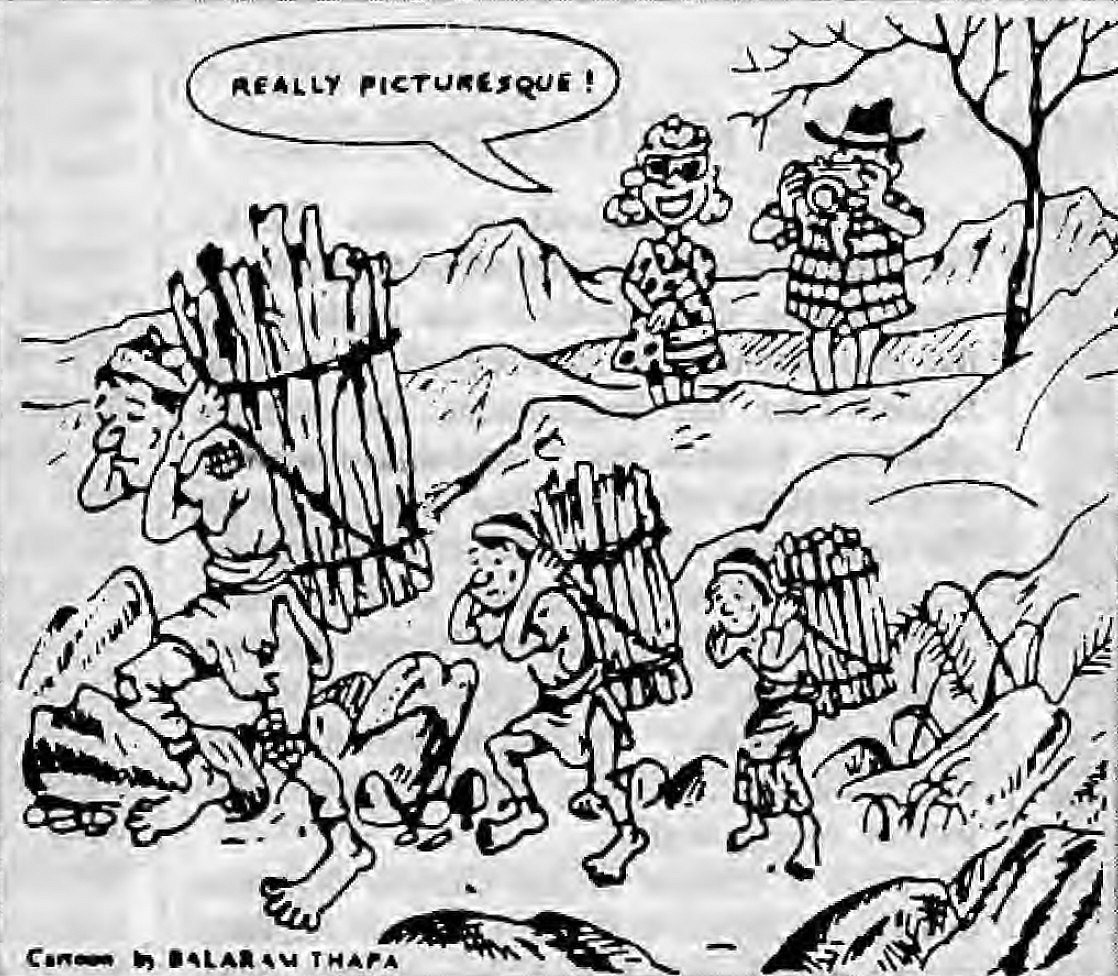
Is life in the Himalaya on a spiritually higher plane than it is in the rest of the world? Even if it is not, does it do any harm if people across the oceans think of our mountains and its people as somehow exalted? Instead of pointing to the material poverty which forms a counterfoil to the Himalaya's perceived romance, should we just turn up the hype if that will bring more foreign-exchange-laden tourists? How can it hurt if others fantasize about the unremarkable and sometimes harsh living up in Tibet's beleaguered plains, Kathmandu's gullies, the deep gorges of Bhutan, or the extremes of climate in Ladakh's high desert?
These are questions that have yet to be considered seriously in a region where the focus has been either on willy-nilly maximising tourism income (as in Nepal) or protecting one's heritage while maximising tourist income (Bhutan). The impact of perceived exoticism on the host population is a murky area that has been neglected so far by sociologists and psychologists. Perhaps there is nothing intrinsically superior about this place.
Mostly, Himalayans like to bask in the world's overwhelming admiration of their region. If it doesn't bring tangible benefits, there would seem to be psychological rewards. And yet, it is bound to hurt somewhere, sometime, in some way, when people begin to believe an outsider's well-meaning fantasy. It has been said that members of the Third World intelligentsia are all suckers for what the saheb says and does: we follow his scholarship and also his myth-making. In the particular instance, do we tend to internalize what others perceive is our allure and glamour, just as discriminated minorities in developed countries internalize negative images of themselves? The saheb, of course, will go back to Kansas, Kensington or Kew, but we have to descend from the borrowed clouds and return to the squelch of our marketplaces.
HIGH ALTITUDE WOOLINESS