
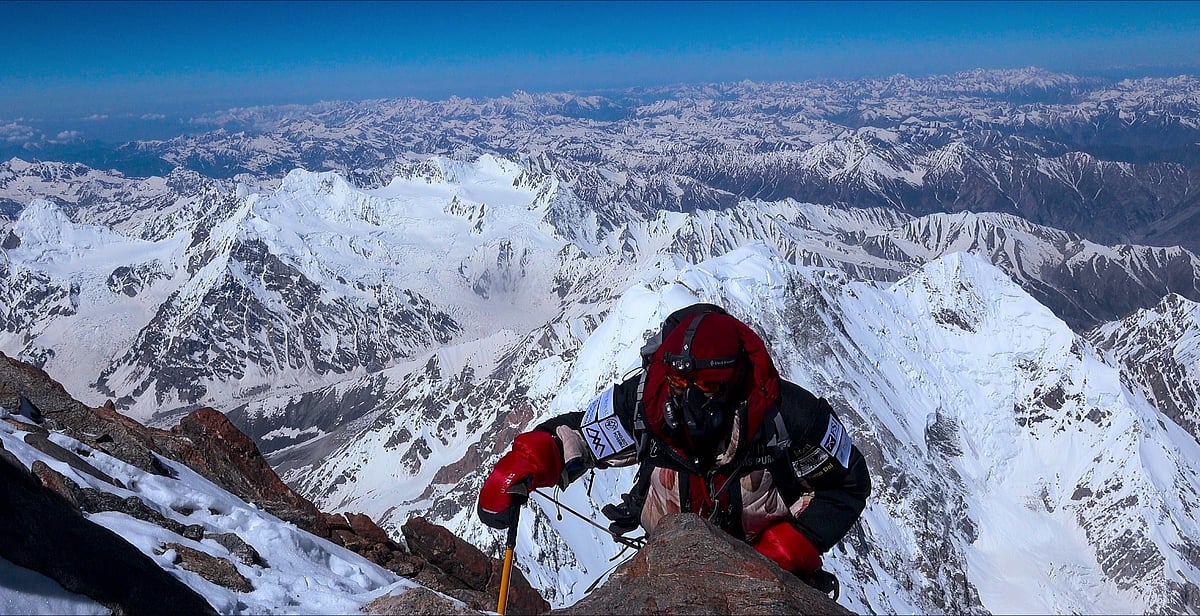
In April 2022, undeterred by two years of pandemic-related challenges, crowds arrived yet again at Everest. Hundreds of hopefuls travelled to base camp from around the world, all desperate to stand on a small flag-strewn piece of ground that just happens to top 'the highest mountain in the world'. Across the first two decades of the twenty-first century, the numbers trying to scale the Earth's 'Third Pole' have continued to rise (with foreign climbers routinely outnumbered by phalanxes of professional Southasian guides who fix their ropes and carry their oxygen and supplies). Despite mountains of trash, increasingly severe overcrowding, and growing ethical debates around labour and risk, the allure of Everest (also known as Sagarmatha in Nepal and Chomolungma or 'Mother/Goddess of the world' in Tibet) remains undimmed.
Two hundred years ago, however, standing on Everest's summit would not have been understood as a meaningful thing to do, even if it had been thought possible. Indeed, in 1800 the world's highest mountain was not even thought to be in Asia. Instead, it was believed to be the volcano Chimborazo, halfway around the world in South America. So how did Everest become the highest mountain in the world? And perhaps more importantly, when did we decide that altitude above sea level was something that should make some mountains matter more than others?
For most of human history, the world's highest mountains – ranked as they are today by their elevation above sea level – have not necessarily been the most significant. Instead, proximity to population centres, aesthetics and prominence, or association with important cultural, religious or historical events often mattered more in assigning importance to particular mountains. In Europe, the classical canon of mountains included the likes of Vesuvius, Olympus and Ararat. In Southasia meanwhile, mountains such as Kailash, the hub of the subcontinent's life-giving rivers, or Meru, of central importance in Buddhist, Hindu and Jain cosmology, have long been more significant than eight-thousanders like Everest or the largely obscure K2 (that is, mountains whose main calling card is that they happen to be above 8000 metres tall).
The rise of altitude