
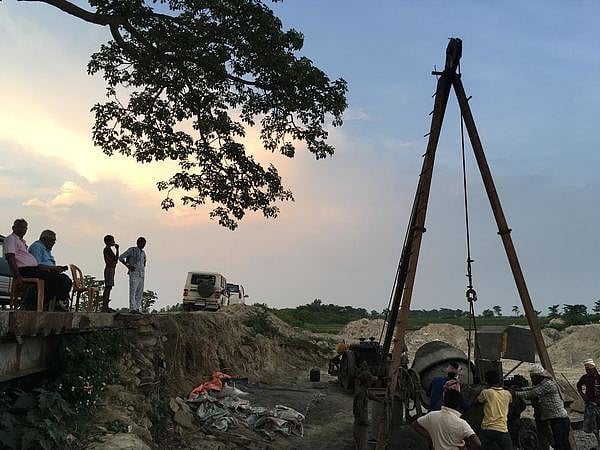
On 18 August 2008, the Kosi River, a large tributary of the Ganga, burst through a man-made embankment on its eastern edge at Kusaha village in Nepal's southeastern district of Sunsari. The result was one of the worst floods in decades. Water swept through villages and towns in southern Nepal and northern Bihar with little or no warning, gushing through homes, carrying away houses and livestock and other property, and smothering fertile land in sand. Over 400 people died and millions were affected by the floods in Bihar, while several dozen people died and tens of thousands were displaced in Nepal.
Although the breach occurred in Nepal, the Kosi embankments (also known as dikes or levees) were built and maintained by India through the Kosi Project under Bihar's Water Resources Department (Nepal played a mostly superficial role in monitoring the embankments through the bilateral Kosi High Level Committee). It appeared that the 2008 disaster was largely due to poor embankment maintenance, because the breach occurred when the river's discharge was only about 15 percent of the 28,500 cubic metres per second the embankments were designed to withstand.
A diplomatic spat ensued. Although some Indian officials claimed that protests and strikes in Nepal at the time (as part of an ongoing Madhes movement) had prevented them from performing repairs, the bulk of the blame clearly lay with India. The Kosi Project's chief engineer had denied there was any danger up until two days before the breach, and locals said the section of the embankment in question had seen no maintenance in years. The disaster was exacerbated by hierarchical institutional structures on both sides of the border that hindered communication between the governments, and by a lack of bilateral planning for such a breach in the 1954 Kosi agreement.
The blame for the 2008 Kosi disaster may have rested with India, but by then, the Nepal government had also built hundreds of kilometres of embankment along other rivers, many of which were breached on a routine basis. The breaches were associated with administrative weaknesses, but there are also technical reasons why embankments are an inappropriate technology for many of Nepal's rivers. Unfortunately, rather than learning from the 2008 disaster, the Nepal government has continued to expand embankment construction over the past decade, increasing the risk of more catastrophes in the future.