
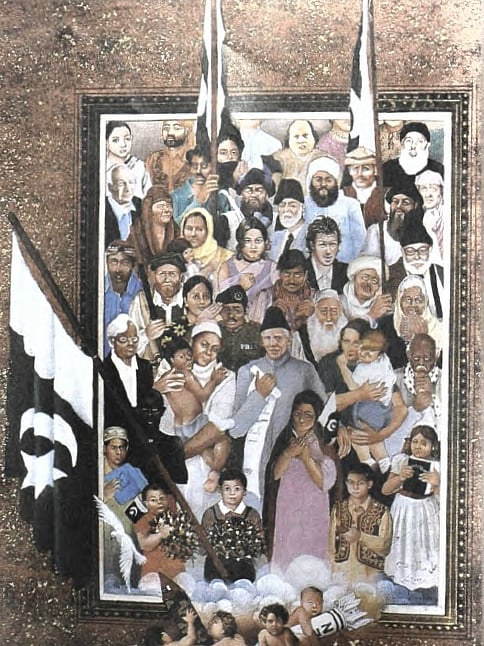
Pakistan has been a state since 1947, but is still not a nation. More precisely, Pakistan is the name of a land and a people inside a certain geographical boundary that is still lacking the crucial components needed for nationhood: a strong common identity, mental make-up, a shared sense of history and common goals. The failure so far to create a cohesive national entity flows from inequalities of wealth and opportunity, absence of effective democracy and a dysfunctional legal system.
While it is true that most Punjabis think of themselves as Pakistani first and Punjabi second, this is not the case with the Baloch or Sindhis. Schools in Balochistan refuse to hoist Pakistan's flag or sing its national anthem. Sindhis, meanwhile, accuse Punjabis of stealing their water, the Muttahida Quami Movement (MQM) runs Karachi on strictly ethnic grounds, and in April the Pashtun of NWFP successfully had the province officially renamed Khyber Pakhtunkhwa (against the wishes of other residents). In getting a job, caste and sect matters more than ability, and ethnic student groups wage pitched battles against each other on campuses throughout the country.
The lack of nationhood can be traced to the genesis of Pakistan and the single factor that drove it – religious identity. Carved out of Hindu-majority India, Pakistan was the culmination of the competition and conflict between natives who had converted to Islam and those who had not. Converts often identified with Arab invaders of the last millennium. Shah Waliullah (1703-62), a 'purifier' of Islam on the Subcontinent who despised local traditions, famously declared 'We [Hindustanis] are an Arab people whose fathers have fallen in exile in the country of Hindustan, and Arabic genealogy and the Arabic language are our pride.'
The founder of Pakistan, Mohamed Ali Jinnah, also echoed the separateness of Muslims and Hindus, basing the struggle for Pakistan on the premise that the two peoples could never live together peacefully within one nation state. But Jinnah was unrecognisably different from Waliullah, a bearded religious scholar. An impeccably dressed Westernised man with Victorian manners, a secular outlook and an appreciation of fine foods and wines, Jinnah nevertheless eloquently articulated the fears and aspirations of an influential section of his co-religionists. Interestingly, he was opposed by a large section of the conservative ulema, such as Maulana Maudoodi of the Jamaat-e-Islami, who said that Islam must not be confined to national borders. But Jinnah and his Muslim League won the day by insisting that Muslims constituted a distinct nation that would be overwhelmed in post-British India by a larger and better-educated Hindu majority.