
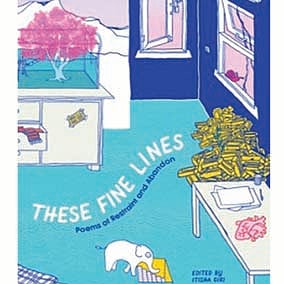
In the introduction to These Fine Lines, a collection of poems written by young Nepali women, the editor of the anthology Itisha Giri asks, "What kind of women are we?" The poems seek to present to the reader an "intimate insight into the Nepali female experience" – an attempt to centrestage the lives of women in their own words, to represent their own subjectivities. At any point in history or anywhere in the contemporary world, this is an important cultural effort. Each act of self-representation contains the possibilities of evoking a consciousness on what being woman means in a hierarchical and unequal world, where women themselves are plotted along different levels of advantage. While these poems can indicate binding experiences across class, caste and ethnicity, one in which we are able to detect and recognise patterns of structural inequality of which we are all part, it is worth examining what is distinct about the Nepali experience and the poems of these particular women. Can it be representative of all Nepali women? The introduction cautions that they are not. But what does it say about the fraction it does represent?
These Fine Lines was steered by a group of young Nepali slam poets who are a part of the poetry network called 'Word Warriors'. The collective was formed following an event organised by a bookshop called Quixote's Cove in Kathmandu, in collaboration with the US embassy in 2010. Slam or spoken word poetry first gained ground in Chicago's working class bars in the US in the late 1980s. A countercultural form, it emerged as a challenge to the kind of highbrow poetry perceived to be locked in academia, and as an attempt to subvert the conventions of the existing literary canon. The focus was shifted to its performative aspect and the poems began to be delivered with great emphasis to engage its immediate audiences. These poems are usually performed in cafes, bars, bookshops, and as such may be regarded as an urban art form.
Slam poetry is consciously political and like in the US, where the form developed, it tends to focus on marginalised identities along racial, sexual and gender lines. Given the immense success it has enjoyed in the US in the past decade, we are seeing its growing popularity in other parts of the world. In Kathmandu, it is the Word Warriors who have been at the forefront of this phenomenon. And with support from organisations like the Danish Centre of Culture and Arts, they have also been taking this art form outside the urban limits of the capital city through one of its programmes, Write to Speak. While Nepali-language literature has had stalwart women poets such as Parijat and Banira Giri in the past and Momila and Sarita Tiwari more recently, this collection is the first of its kind in Nepal.
Although containing elements and techniques of the spoken word style, the collection in These Fine Lines is written poetry and is thus tied to the formal constraints of the written word. American writer Karen Finneyfrock in the foreword describes the poems as both "fragile and fierce". That certainly is an aesthetic that has long belonged to women's poetry, especially those that carry a political awareness. "It is exhilarating to be alive in a time of awakening consciousness; it can also be confusing, disorienting, and painful," wrote Adrienne Rich in 1971 in her essay 'When we dead awaken', speaking of a moment in American women's writing that was finding its feet in the feminist tradition. Every generation of women writers has to continue to struggle with the canon, or the literary marketplace that still upholds as its pinnacle the masculine artist.