
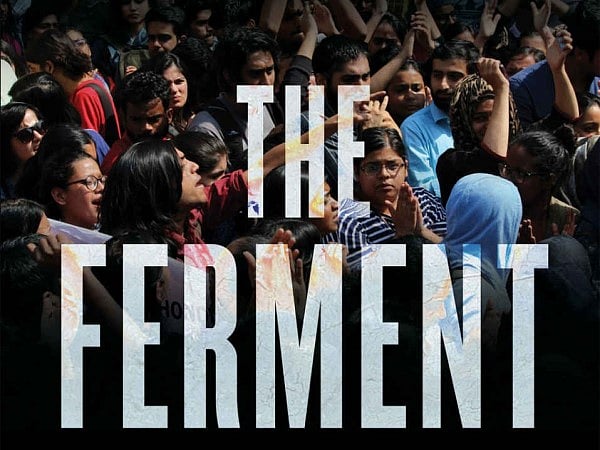
Journalist Nikhila Henry's debut book, The Ferment, opens with her speaking with Rohith Vemula, a Dalit PhD scholar whose life, and death, was to become the defining symbol of youth unrest in India under Narendra Modi's rule. Sitting on a desolate rock overlooking the palatial vice chancellor's lodge at the University of Hyderabad (UoH), Vemula summons the unlikely topic of one's post-death wishes: whether to be buried or to be burnt. Vemula desires to be buried, so that he can be visited by his people, he tells Henry. But even this modest wish of his would remain unfulfilled, just like his ambition of becoming a science writer – "like Carl Sagan", as he wrote in a letter written before he committed suicide.
Vemula ended his life in January 2016 after persistent harassment and humiliation. A suspension of his fellowship for the seven months leading to his death had made him financially vulnerable. In a classic example of social ostracism, he, along with four of his comrades in the Ambedkar Students' Association, had been barred from using the university's hostel and other public spaces by the university administration–a move that was likely prompted by members of the Modi cabinet. In the end, the Hyderabad police would take his body after post-mortem and cremate it without his near and dear ones present to bid him farewell.
The unprecedented ferment that spread across the country in the wake of Rohith Vemula's death, and the underlying tensions that gave rise to India's numerous youth movements, are the subject of this new book by Nikhila Henry, who had reported these stories over several years. The Ferment, in the words of the author, is "a guided tour through the youth battles" in the country. These battles, however, are not sporadic protests, but fierce expressions of discontent and outrage against systemic neglect and, worse, injustice.
Rohith Vemula's death created a wave of anger, particularly among students. The University of Hyderabad's shopping complex, known as Shopcom, became a site of pilgrimage for activists and opposition politicians. Students and youths formed joint action committees for 'Justice to Rohith' across the country and did their bit to keep the issue alive. As the protests intensified, the University of Hyderabad's Vice Chancellor Podile Appa Rao disappeared, ostensibly on leave. When he returned after two months, protesting students attempting to enter his home were beaten mercilessly by the Telangana state police, who also attacked faculty members who tried to intervene. The police eventually arrested 25 students and two faculty, who were detained in jail for nearly a week, and charged, before being released on bail. The central government, meanwhile, formed a one-man judicial commission, ostensibly to investigate the circumstances in which Vemula committed suicide, but which seemed intent on proving that he was not a Dalit. Faced with a hostile government, the protests for Justice to Rohith withered away within months.