
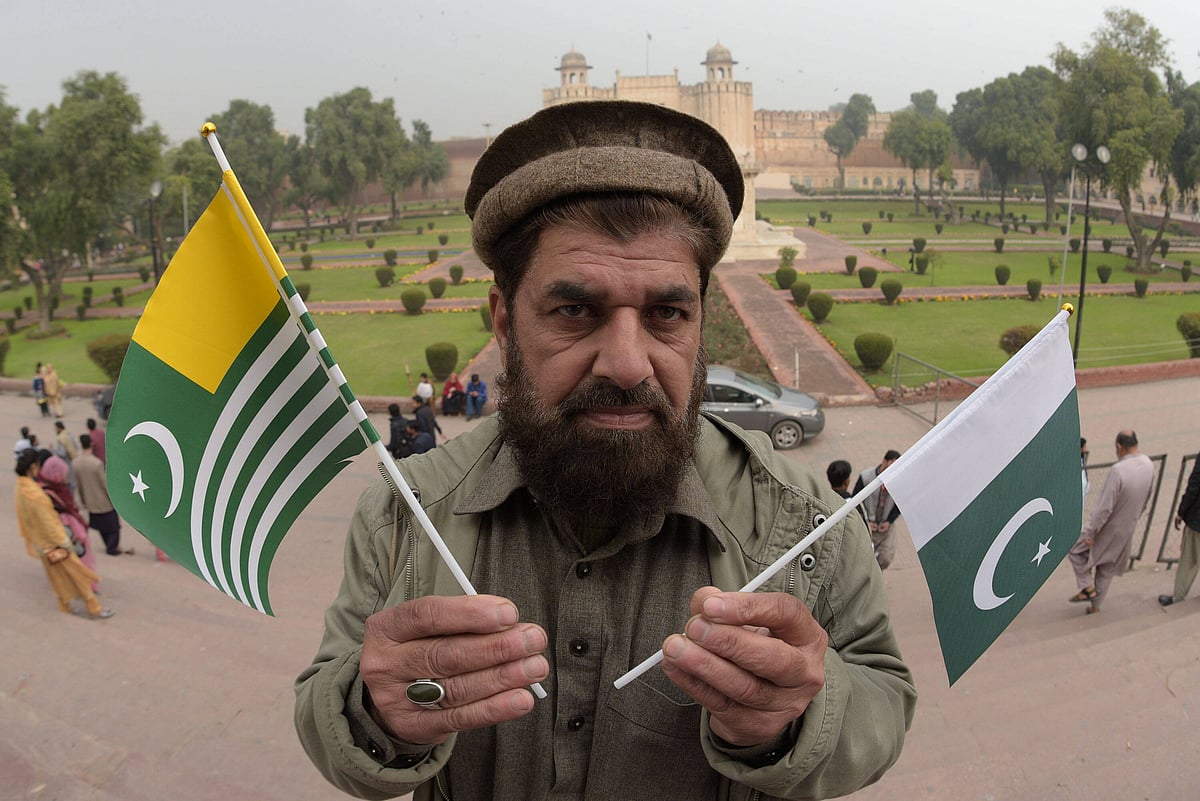
In May 2023, a group of protesters in Rawalakot, in the Poonch district of Pakistan-administered Kashmir, began a sit-in. Their demands were for the regional administration of Azad Jammu and Kashmir to lower the price of electricity and provide a subsidy on wheat flour, prices of which had soared due to high inflation and were symptoms of the politically triggered economic distress that the country has been facing for more than two years. The protesters also asked that the government spend more on Kashmir’s public rather than on the political elites who get their salaries, allowances and perks from Islamabad. When the government failed to respond, many residents stopped paying their electricity bills. From the first week of August onwards, protesters began to burn their electricity bills in public demonstrations of frustration.
This simmering tension lasted a year until, on 8 May 2024, the Joint Awami Action Committee (JAAC), an alliance of civil rights groups in the region, escalated protests, planning a march to the regional capital, Muzaffarabad. The government sent in paramilitary troops, who opened fire and lobbed teargas at protesting crowds, killing at least four people and resulting in the arrests of at least seventy activists. With the protests expected to gain further momentum after the incident, the Pakistan government agreed to provide PKR 23 billion (USD 82 million) in subsidies to the region to pacify protesters.
The decades-long armed insurgency in the India-administered region of Jammu and Kashmir, a regular source of geopolitical tensions between India and Pakistan, often makes international headlines. However, Pakistan-administered Kashmir – often referred to as Azad Kashmir, or “free” Kashmir – rarely makes the news. The events of this May were the exception and shattered the myth of the region being truly free – a myth Pakistan has carefully nurtured to burnish its image in India-administered Kashmir, which New Delhi keeps under severe repression. Both India and Pakistan lay claim to the whole of Kashmir, even while each controls only part of it.
While the protests have since been called off, most people involved in the movement who I spoke to believe it to be a temporary calm before a new storm. According to one protester, who spoke on condition of anonymity, a key reason is that Kashmiris feel relegated to secondary status within Pakistan. The protester said that Islamabad “arbitrarily violates, every now and then, concessions that we deserve and the basic autonomy we demand” – even while Azad Jammu and Kashmir is nominally an administrative unit within Pakistan.