
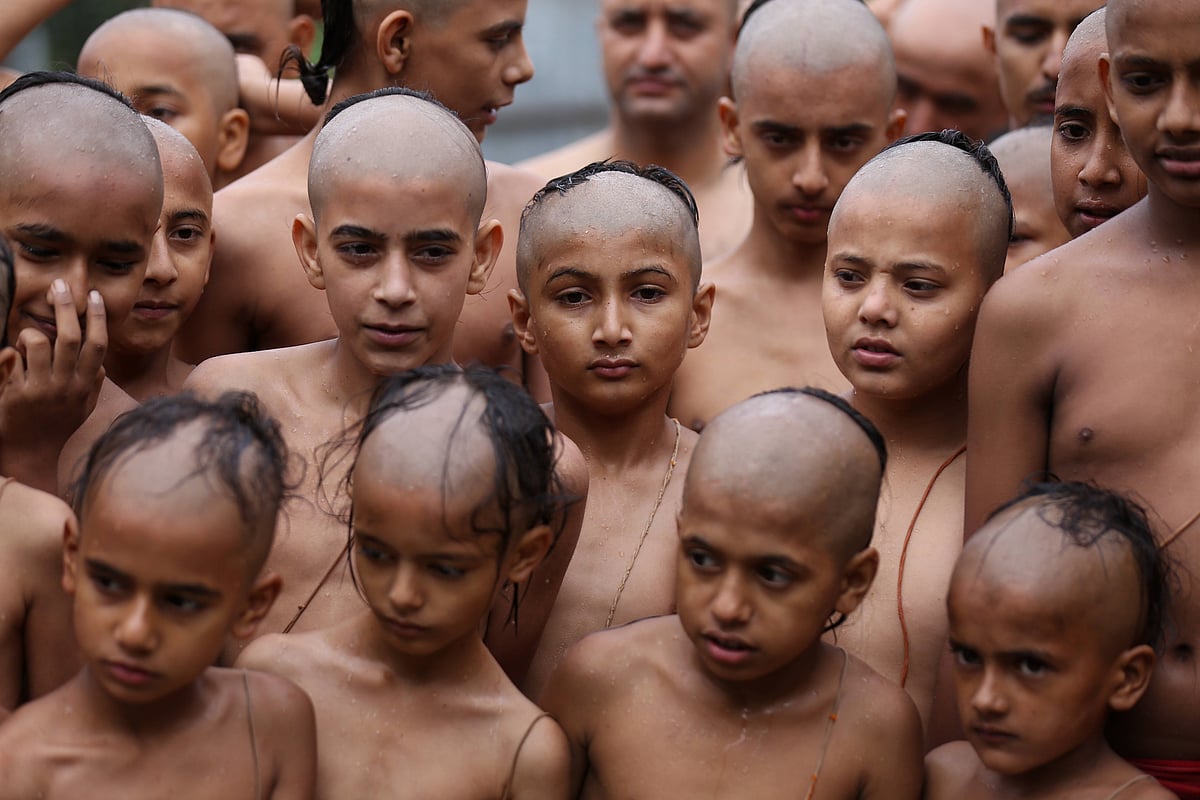
Brahmanism is under deep scrutiny. In Nepal, the era of multiparty democracy has brought for the many scholars,and larger numbers of politicians and activists of ethnicity, who are critical of what they maintain is the continuing hold of Brahmanism over Nepali life and polity. However, it is not immediately clear how much of this criticism of Brahmanism arises out of a deep-seated dislike for Bahuns as individuals and as a group, and how much arises from disavowal of the country´s political and administrative heritage.
Certainly, the Bahuns of Nepal have no monopoly on saintliness, despite their claims to religiosity and higher learning. Likemembers of any other group,Bahuns have their share of ills and shortcomings along the lines of which they have been stereotyped. While this stereotyping, too, in itself is not unexpected, the increasingly shrill anti-Bahun pronouncements by some in the ethnic leadership can have far-reaching implications, including the undermining of the very concept of the Nepali State, its unity and integrity. If this process of uncritical lambasting continues toits natural denouement, today´s Bahun-bashing—for what it means to the notion of Nepal — will harm all population groups of the country, regardless of class, place of origin, religion or ethnicity.
Nomenclature and Ancestry
Ethnic disgruntlement has always been a facet of Nepali history, and it could not have been otherwise in a country of such demographic diversity. Under successive autocratic regimes right up to 1990, however, the sensitivities of the people remained largely bottled up. Ethnic politics surfaced dramatically and unambiguously with the dawn of democracy in Spring 1990, and gathered momentum during the drafting of the democratic Constitution later that year.
One significant development during this period was the coming together of activists from among different ethnic groups to form the Janajati Federation. Anti-Brahmanism has been one of the main planks of the Federation´s programme. This lobby tends to heap blame and all real and perceived national ills — from the idea of the Hindu state to upper-caste Hindu domination in national politics, and the existing social and economic realities — on unfortunate Brahmanism. According to this view, the exploitative tendencies of Bahuns is still very much there and continues even in today´s democracy. The point is backed with reference to the stillborn move to impose Sanskrit in the school curriculum and the national language status accorded to Nepali in the new Constitution. Both are seen as signs of Brahmani domintion.