

This week in Himal
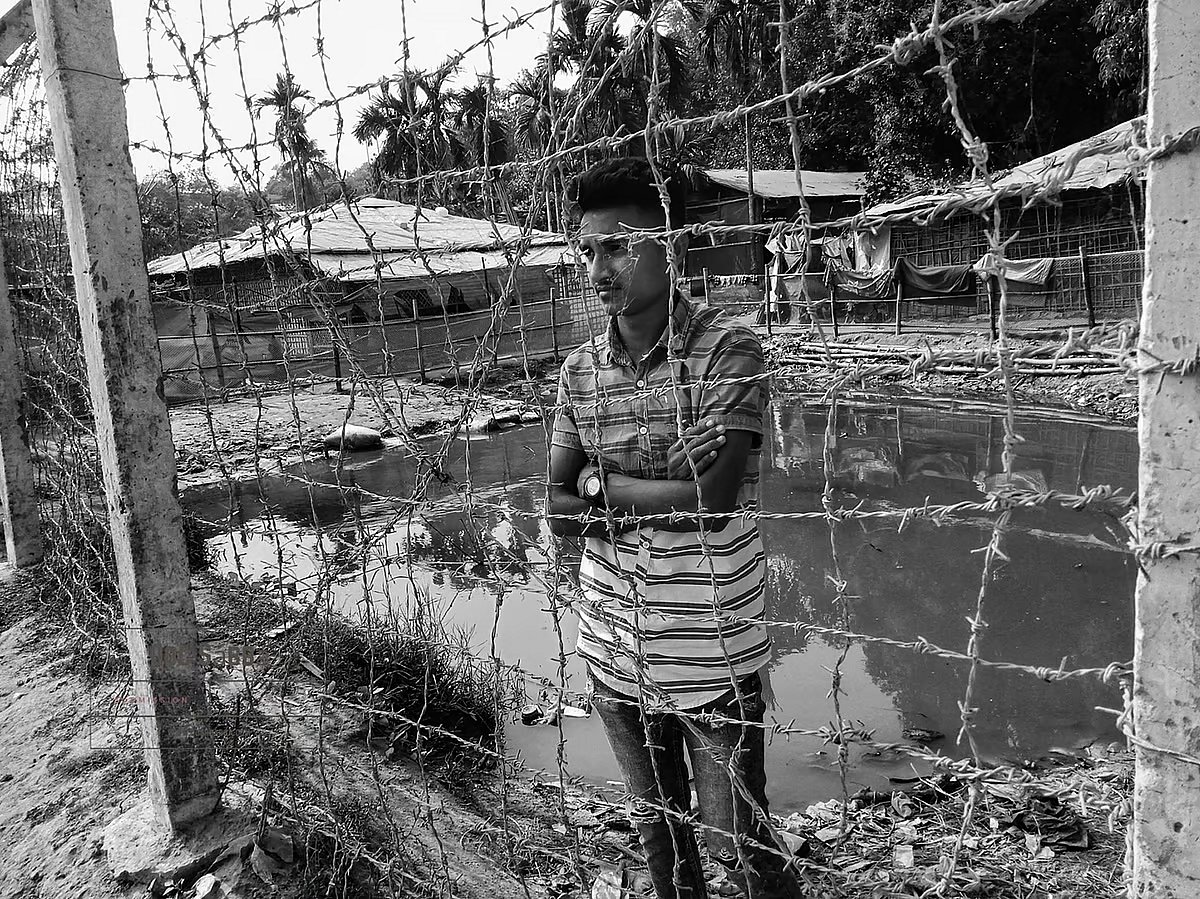
This week, Shafiur Rahman writes that Bangladesh’s accommodation of the Rohingya, while seen as humanitarian, is part of an exploitative system that profits from their labour, denies them opportunities and locks them into dependence on foreign aid.
For the next episode of the State of Southasia podcast, host Nayantara Narayanan speaks with journalist and documentary-maker Shafiur Rahman on Bangladesh’s continued exploitation of Rohingya refugees and the myriad other dangers these refugees face.
We’re also excited to announce that we’ll be screening ‘After Sabeen’ directed by Schokofeh Kamiz for the April edition of Screen Southasia, in collaboration with Film Southasia! Click here to receive the screening link.
Also read: Jallikattu, caste, and the pitfalls of adapting the Tamil classic ‘Vaadivaasal’
Also read: Saraid de Silva on her Women’s Prize longlisted novel ‘Amma’: Southasia Review of Books podcast #20
Also read: How Bangladesh is exploiting the Rohingya refugee crisis
This week in Southasia
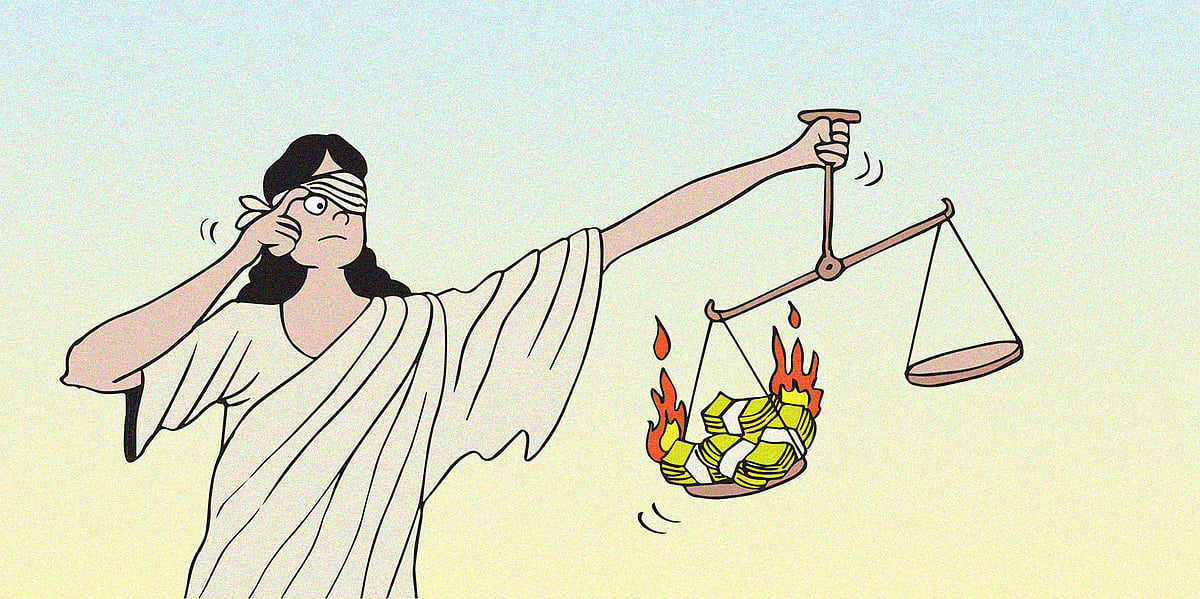
A fire at the residence of a Delhi High Court judge Yashwant Varma has sparked controversy after an inquiry report revealed a large sum of cash in an outhouse attached to the premises. Police were not able to inspect the scene of the fire for at least eight hours, while Chief of Delhi Fire Services Atul Garg had to debunk media reports that circulated soon after the fire claiming that no cash had been found. On 25 March, a three member committee of high court judges began an investigation, even as Varma was removed from active duty. The Supreme Court Collegium proposed Varma’s transfer to the Allahabad High Court (a matter which the Supreme Court registry says is “independent and separate” from the in-house inquiry).
In an official response, judge Varma has said no cash was placed in the storeroom by him or family members, adding that the cash was planted to “frame and malign” him. However, the case has already sparked discussion on India’s judicial system, with more than 45 million pending cases, inadequate judges and infrastructure to meet India’s needs, and antiquated judicial processes that need reform. Legal experts have also highlighted that existing legal mechanisms are inadequate to address judicial corruption; with no judges impeached or convicted for corruption in India.
Elsewhere in Southasia
- Curfew imposed in Kathmandu on 28 March as pro-monarchy protesters clash with security personnel, security heightened as pro-monarchy and pro-republic groups organise simultaneous protests
- US lawmakers introduce bill seeking sanctions on Pakistan’s army chief for political persecution, call to free detained former prime minister Imran Khan
- Powerful 7.7 magnitude earthquake strikes Myanmar near Mandalay, causing building damage, evacuations as far as Thailand. Myanmar’s junta declares a state of emergency
- India’s film censors block the release of award-winning film Santosh in India for its depiction of police brutality, caste discrimination and sexual violence
- The United Kingdom imposes sanctions on three former Sri Lankan commanders and an ex-commander of the separatist Liberation Tigers of Tamil Eelam for “serious human rights violations and abuses” during Sri Lanka’s civil war, Sri Lankan government says UK’s actions ‘unilateral’ and will ‘complicate the national reconciliation process’
- Mumbai police issue second summons to Indian comedian Kunal Kamra for jokes directed at Maharashtra’s deputy state minister Eknath Shinde in latest instance of censorship of comics in India
- Members of rights movement Balochistan Yakjheti Committee including Mahrang Baloch, Sammi Deen Baloch arrested after crackdown on Baloch protesters highlighting impunity around extrajudicial killings and enforced disappearances in Balochistan
- Nepal government sacks Nepal Electricity Authority head Kulman Ghising, replaced with Hitendra Dev Shakya after growing tensions with Congress-UML ruling coalition around load-shedding, bilateral energy deal with India
- New guidelines require satellite service providers in Bangladesh to route internet traffic through local gateways, allowing the government to shut down internet access ‘if needed’ after interim leader Muhammed Yunus says commercial deal with Elon Musk’s Starlink will be reached within three months
- Myanmar intensifies mandatory conscription in Mandalay amidst reports of extortion as battle between junta and anti-junta armed groups continues
- Former Controller General of Immigration Mohamed Shamaan Waheed arrested after police raid his residence, revealing migrant worker extortion
- Investigation into Bhutan’s boulder export industry reveals widespread practice of foreign businesses using local licenses, allowing foreign entities to manipulate prices and evade taxes
- Sri Lankan anthropologist Gananath Obeyesekere passes away at 95, drawing tributes about his contributions to anthropology
- At least four Nepali-speaking Lhotshampa refugees in Pennsylvania detained by US
Immigration and Customs Enforcement and deported to Bhutan, despite the country forcibly expelling the Lhotshampas in the 1990s
Only in Southasia!
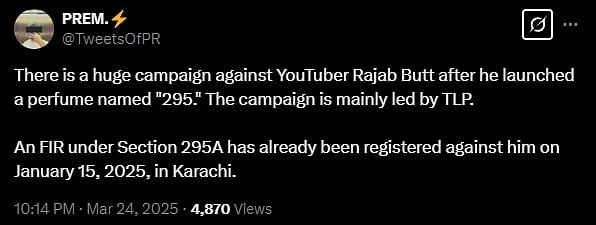
This week, Pakistan YouTuber Rajab Butt found himself in hot water when he launched a perfume. The problem was the name of the perfume, “295” - a reference to Pakistan’s blasphemy laws under Pakistan’s Penal Code. Butt said he was inspired to launch the perfume after a video of his was deemed ‘blasphemous’ - citing Punjabi rapper Sidhu Moose Wala, known for his promotion of gun culture and inflammatory lyrics, as inspiration. Butt promptly faced blasphemy charges filed by the Islamist party Tehreek-e-Labbaik Pakistan. TLP’s leader said he was watching videos on his phone when he just happened to stumble upon Butt’s perfume ad (or maybe he’s a secret follower of his YouTube channel?) Either way, Butt faces arrest charges - and it’s not the first time he’s landed in legal trouble. Just recently, he was in the news for owning a lion cub, with the court mandating that he share animal rights videos as part of his court-mandated community service.
From the archive

Unpacking Digital Bangladesh (January 2022)
This week, given reporting on Bangladesh’s exploitation of the Rohingya crisis, Zara Rahman’s article from 2021 is worth revisiting. Rahman unpacks the Bangladesh government’s promise of a smart digital Bangladesh, which while promising efficiency is allowing for the exploitation of data - including of the Rohingya refugees, through the collection of biometric data which is being shared with the Myanmar government without the Rohingya’s knowledge, raising fears of forced repatriation despite the discrimination they have faced within Myanmar.