
Eighteen months ago, H S Debnath, the deputy director of the Botanical Survey of India, stumbled upon rare volumes of intricate designs and weaving techniques while breaking open a locked cupboard – British locks no less, he adds. The find, he says, consists of two series of volumes, in sets of 18 and 12, dating back to 1866, titled, Textile Manufactures and Costumes of the People of India. Together, the volumes present nearly 2000 fabric designs, complete with their length, breadth, weight, place and price specifications, as well as detailed archival material on weaving patterns, techniques and processes, with a companion volume on natural dyes. The whole project reflects the British zeal for detailed study, possibly undertaken, Debnath says, as an administrative enterprise to map agrarian patterns and output in the wake of famines. How the volumes ended up in almirahs in the Industrial section of the Indian Museum in Calcutta, where the Botanical Survey has its offices, remains anybody's guess.
Whatever the answer, Debnath's find excited many. "Indian textiles had never been documented before, as it has traditionally been a father-to-son communication," says Kasturi Gupta Menon, the honourary president of the Crafts Council of India. Menon feels that such documentation can find a practical application today, if the designs are taken to weavers to be revived. Debnath says that efforts are now underway to digitise the entire collection, and to see "if the material can be commercially applied, especially for the country's ailing handloom sector". Finds such as Debnath's open up fascinating windows into an era when Indian textile products dominated the imagination and commerce of merchant traders from Central Asia and the Mediterranean to the remoter landscape of the Netherlands, bringing them to ports in the Deccan, Coromandel and Bengal.
Globalisation in India has today become synonymous with back offices and call centres. In such places, tens of thousands of young adults in the Subcontinent attend to employers and customers in Europe and the United States. But much as the West would like to believe that it invented globalisation by connecting businesses and offices throughout the world using technologically advanced communications systems, it is Southasia that has been a hub of global commerce for centuries. According to a 2003 World Bank study, Asia's share of global trade from the 11th until the 18th century (the beginnings of the industrial revolution in England) stood at an average of 70 percent, with Southasia accounting for a major chunk. The paper goes on to assess that, in 1000 AD, Asia's share of the world's GDP was 70 percent, versus just nine percent for Western Europe.
On the misoom
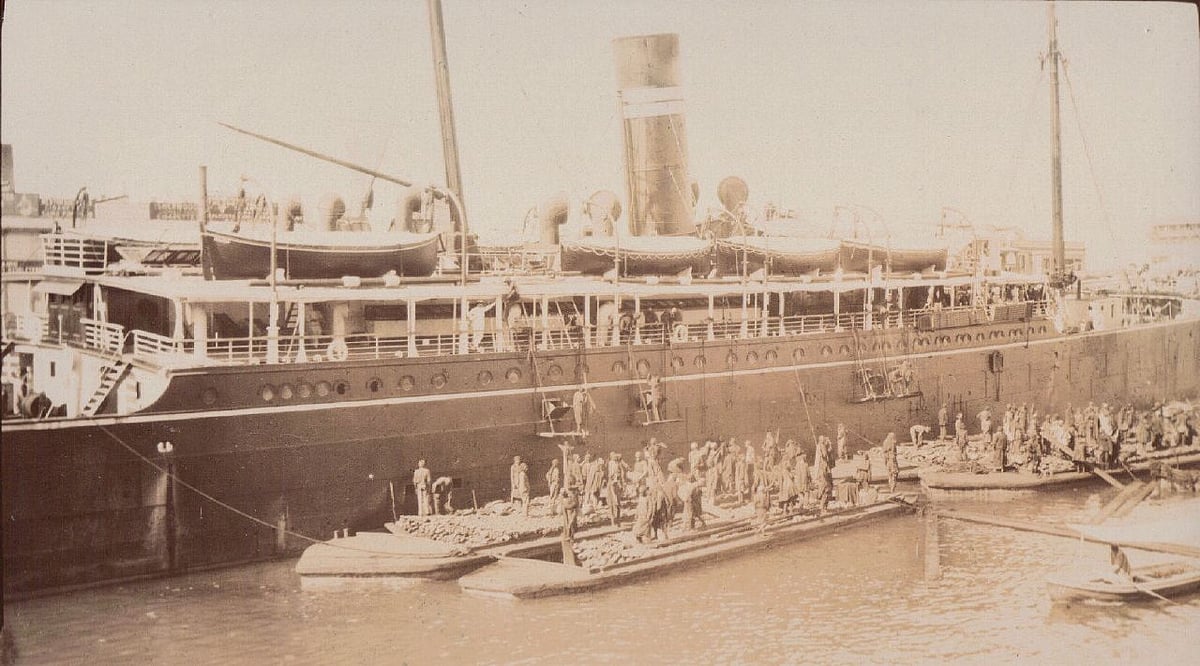
History has seen multiple forms of globalisation. And whatever may fuel this process – cultural globalisation represented by blue jeans and rock bands, or economic globalisation by way of multinational trade – no race or nation has ever remained in complete isolation. If today it is the Internet that largely drives and facilitates globalisation, it was ships and the sea that did so in earlier days. If it is the Western world's quest for cheap labour and skills that drives global commerce today, it was exotic products – pepper, cinnamon, silk, cotton and textured fabrics – for which Persian, Arab and Chinese merchants risked uncharted seas for two millennia.