
India is a billion-weak nation thirsting for truly international sporting glory. Every four years, the fact that Olympic success eludes India is lamented in public fora. Karnam Malleswari's weightlifting bronze in the 2000 Olympics, PT Usha's almost-bronze many Olympics ago and fading memories of the men's hockey team's successive golds offer little consolation. But the last two decades have seen a phenomenal hardsell of cricket. Though cricket is truly an uninternational sport — played by hardly 12 nations, all of them former colonies of the British empire — India's success in the 1983 World Cup, followed by the hosting of the Reliance Cup in the Subcontinent, and the subsequent television boom spurred by the policy of 'liberalisation' (a very clever word), corporate sponsorship and subsidisation, resulted in cricket effectively being marketed as the game that mattered. Cricket, like popular cinema, became a product of mass consumption, especially after one-day games became a regular fixture. More physical sports such as hockey and football have been effectively jettisoned for 'the gentleman's game'.
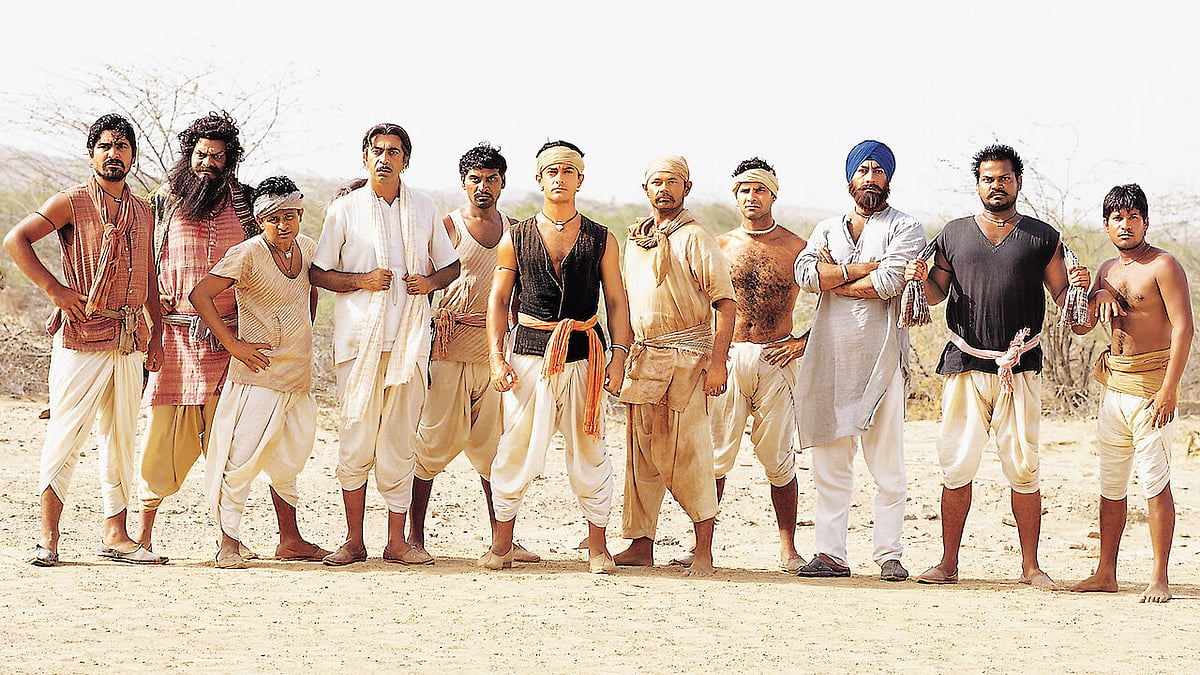
The celebration and success of the movie Lagaan as a nice little good-vs-evil, David-vs-Goliath tale must be understood in this context. Lagaan has won an Oscar nod for inclusion in the 'best foreign film' lineup. After a year of hype and accolades in the Indian media and deft packaging for select Western festival circuits and in Hollywood, producer-actor Aamir Khan seems to have almost pulled off what he set out to achieve.
About the same time that Lagaan's nomination for the Oscar made news, Indian newspapers and television channels devoted more than the usual space to some unusual cricket news. In Madras, Karnataka had won the Hong Kong and Shanghai Bank Corporation National Cricket Championship for the Blind, defeating Delhi. A 'liberal-secular' newspaper which has no qualms calling itself The Hindu (February 13-14, 2002) extensively reported the tournament and even carried two-column pictures. Tamil television channels covered it as the 'soft story' of the day in their news bulletins. It looks like the World Cup for the Blind will be hosted by Madras in December 2002. Some multinational corporation, driven by late-capitalist guilt and the 'we-care' spirit, might sponsor that event too.
As I begin this, I feel weighed down by the burden of addressing (the 'liberal'?) readers of Himal on the regressiveness of a film like Lagaan, and even more weighed down by the prospect of convincing them that cricket in India has been a truly casteist game — a game best suited to Hinduism. Burdened, because even those most critical of overriding nationalism jump with joy when their national team wins. In fact, as a friend points out "apart from eating with our fingers, unfortunately both cricket and Hindi films unite South Asians". For a Subcontinent that so obsessively watches cricket and Hindi cinema, Lagaan offers cinema-as-cricket and cricket-as-cinema. In the Hyderabad of mid-1990s, as a university-bound hostelite watching a one-day match in the common room I saw all groups and communities 'cheering for India'. Telugu-speaking Dalits, Oriyas, Malayalis, brahmans, Kannadigas, M.Tech students alike would all come in identifiable gangs, reserve seats, and be 'united' by cricket even if they had battles to fight outside the common room. The other programmes that drew huge collective viewership were film songcountdowns in Hindi and Telugu.