
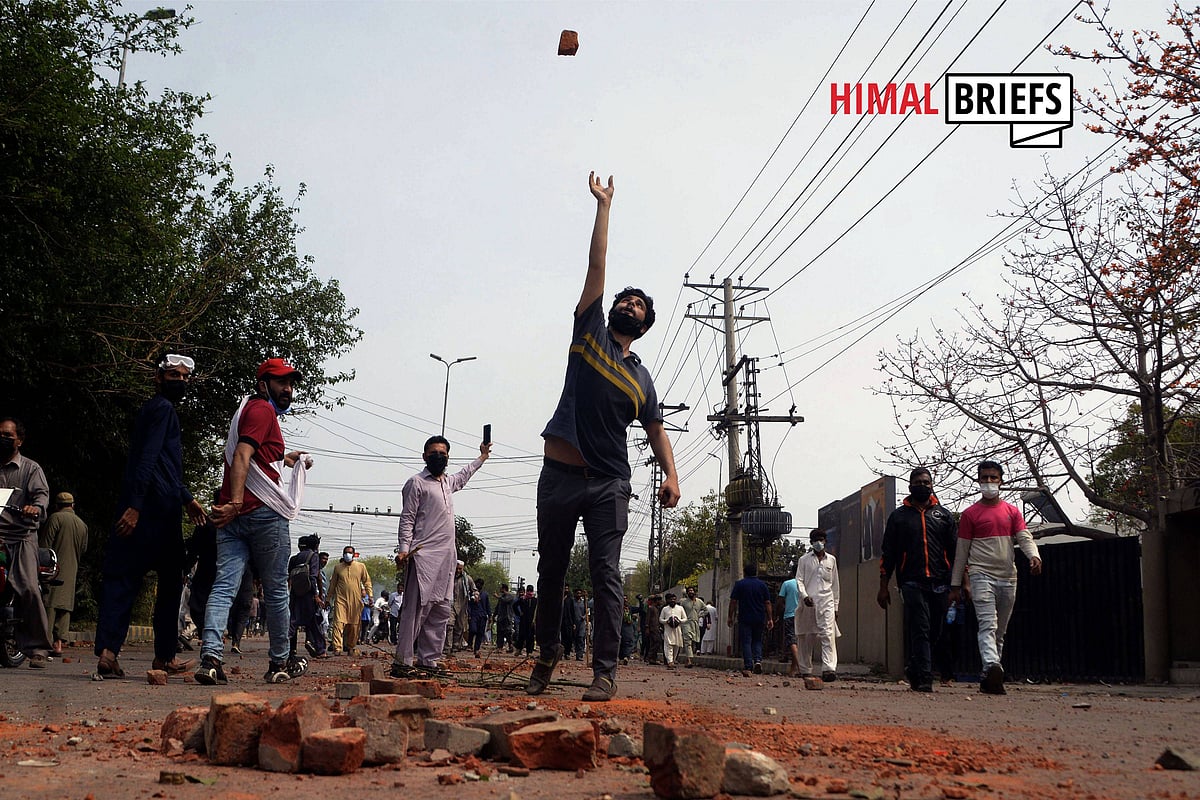
On 19 June, a district and sessions court in Islamabad sent the Pakistan Tehreek-i-Insaf (PTI) leader and former state interior minister Shehryar Afridi to Rawalpindi's Adiala jail on a 14-day judicial remand in a case related to the 9 May riots. This marks another sobering development in the series of events that have unfolded after supporters of Imran Khan staged riots and unlawfully entered military installations to protest Khan's arrest in May. On 20 June, an anti-terrorism court issued non-bailable arrest warrants against Khan himself and several other PTI leaders on charges related to the rioting.
Many, and especially Khan's supporters, saw the attack on the Corps Commander House (the Jinnah House) in Lahore as a "revolutionary movement." The attack – and the subsequent arrests of the attackers – has now turned into a reason for the military leadership to consolidate its dominant political position, which, before 9 May, seemed under a lot of pressure from Khan's PTI. For the past year, Khan had been directly targeting the military's role in facilitating the end of his government in April 2022 with a vote of no confidence.
On the one hand, the fallout of 9 May has led Khan's PTI to disintegrate from within, with many key leaders opting to either "leave" politics for good or join together to form a new party – the Istehkam-e-Pakistan Party (IPP), led by Khan's former friend Jahangir Tareen, who played a key role in the PTI's victory in the 2018 elections.
Besides, thousands of PTI supporters have been arrested and dozens of them are now being tried in military courts. Khan and some other PTI leaders have said that a lot of the violence was actually planned by the current government, to tighten the legal noose around the PTI and ultimately ban the party. Government officials, on the other hand, contend that Khan is now trying to distance himself from the violence so as to save face. Notwithstanding the controversy, there is little denying that the events of 9 May have spurred the Pakistan Army leadership into action, allowing it to expand its political control.