
On 23 November 2023, Pakistan formally applied to join BRICS, the presently five-nation bloc comprising Brazil, Russia, India, China and South Africa. A spokesperson from Pakistan's foreign ministry confirmed the application, saying, "We believe that by joining BRICS, Pakistan can play an important role in furthering international cooperation and revitalising inclusive multilateralism. We also hope that BRICS will move forward on Pakistan's request in line with its commitment to inclusive multilateralism".
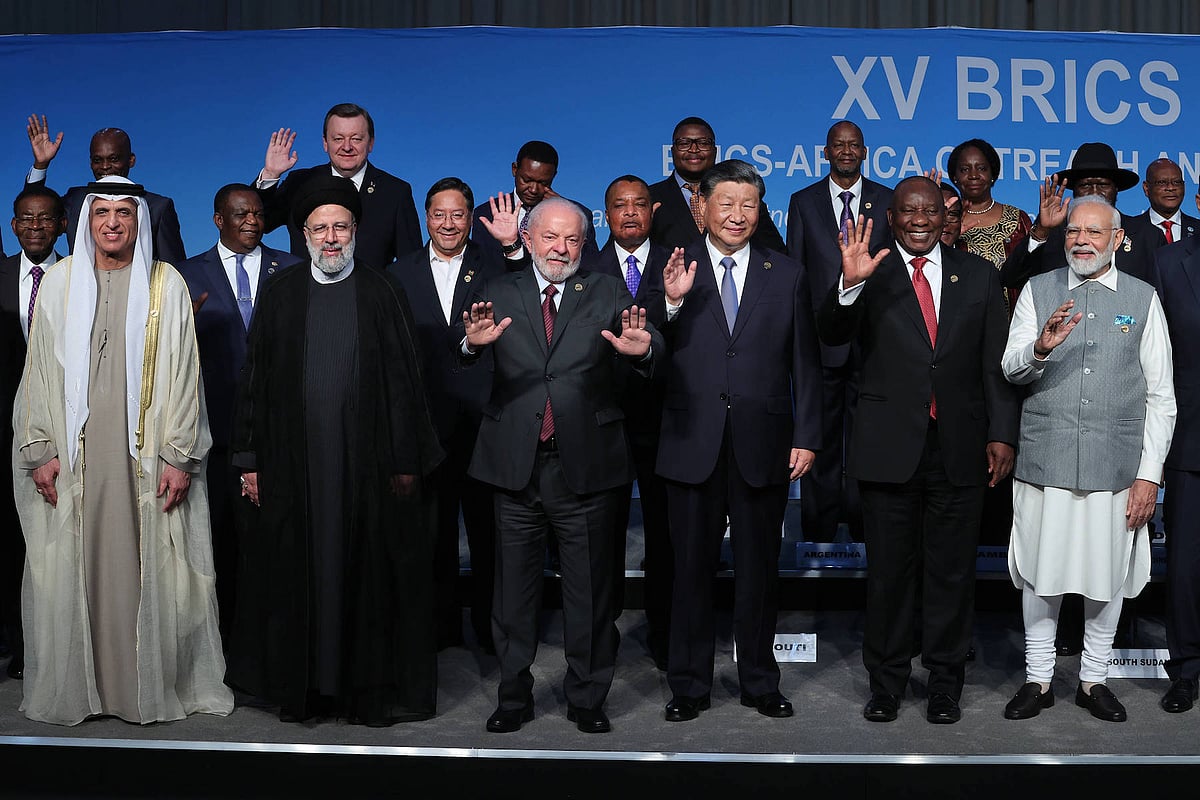
Pakistan is one of many countries flocking to BRICS against the backdrop of a new, multipolar world order. At the BRICS meeting in South Africa in August 2023, at least forty countries expressed interest in joining the group. At the end of the three-day summit, the bloc announced that six countries – Egypt, Ethiopia, Argentina, Saudi Arabia, the United Arab Emirates and Iran – would join BRICS in 2024. This is a move towards what is now being called "BRICS plus".
While BRICS might look like an attractive option for countries seeking to draw maximum benefit by diversifying their foreign ties, the big question is whether Pakistan can expect any material benefit by joining BRICS and adopting its agenda of a multipolar world. The answer is that Pakistan risks losing much more than it gains since the move might antagonise Washington DC, pushing it to block Pakistan's access to Western markets and finance.
In October, before Pakistan formally applied for BRICS membership, the country's caretaker prime minister, Anwaar ul-Haq Kakar, met Russian president Vladimir Putin in Beijing on the sidelines of the Third Belt and Road Forum for International Cooperation. Russia and Pakistan have of late been strengthening diplomatic and economic ties. In June, Pakistan received a consignment of Russian oil – the first delivery of Russian crude to the country since Western sanctions against Russia kicked in at the start of the war in Ukraine. The two countries are also working to resume direct flights. This indicates that Russia, as chair of the 2024 BRICS summit, may well extend its support to Pakistan in its quest for membership. Diplomatic sources familiar with Pakistan's move to join BRICS told Himal Southasian that Pakistan coordinated with both Russia and China to make sure that India, its perennial rival, did not oppose its application. China, they said, has encouraged Pakistan because its membership will help expand the group, which will ultimately help Beijing cement its claim to a much bigger role in international politics.