
On 3 February, a Pakistan court convicted Imran Khan, the former prime minister of Pakistan, and his wife on a charge that their marriage in 2018 violated the law and sentenced them to seven years in prison. This means Khan has now been awarded four convictions in seven months. At the end of January, Khan was convicted in two cases – one related to divulging official state secrets and the other to corruption in retaining a gift he had received while in office. For these offences, the courts sentenced him to 10 and 14 years in prison, respectively. In August 2023, a court found him guilty of corruption linked to real estate and sentenced him to three years’ imprisonment.
With Khan imprisoned and simultaneously booked in over one hundred cases, his party, the Pakistan Tehreek-i-Insaf (PTI), has virtually disintegrated, with key leaders either defecting to other political powers or opting out of mainstream politics. Meanwhile, the former prime minister Nawaz Sharif seems to have made a deal with Pakistan’s military establishment, paving the way for a political revival. Backed by the military, he has managed to get clean chits from the courts in several corruption cases in which he had previously been convicted. Alongside this, Pakistan’s superior courts have also lifted a lifetime disqualification that had barred Sharif from holding any public office.
Sharif, who returned to Pakistan in October 2023 after almost four years in exile in London, is now leading the election campaign of the Pakistan Muslim League–Nawaz (PML–N) for the general election due on 8 February. The 2024 contest is largely between the PML–N and the PTI. The once formidable Pakistan People’s Party has been largely confined to the Sindh province, even though its leader Bilawal Bhutto Zardari is positioning himself as an alternative to the country’s polarised politics. Bhutto Zardari is trying to make inroads into Punjab, where the PPP was originally founded and where the PML–N and PTI now are now dominant, to revive his party’s fortunes. Millions of Pakistanis will vote to select representatives for both provincial and national assemblies. But in the very charged and deeply controversial political environment prevailing in the country, most voters see this election as neither free nor fair.
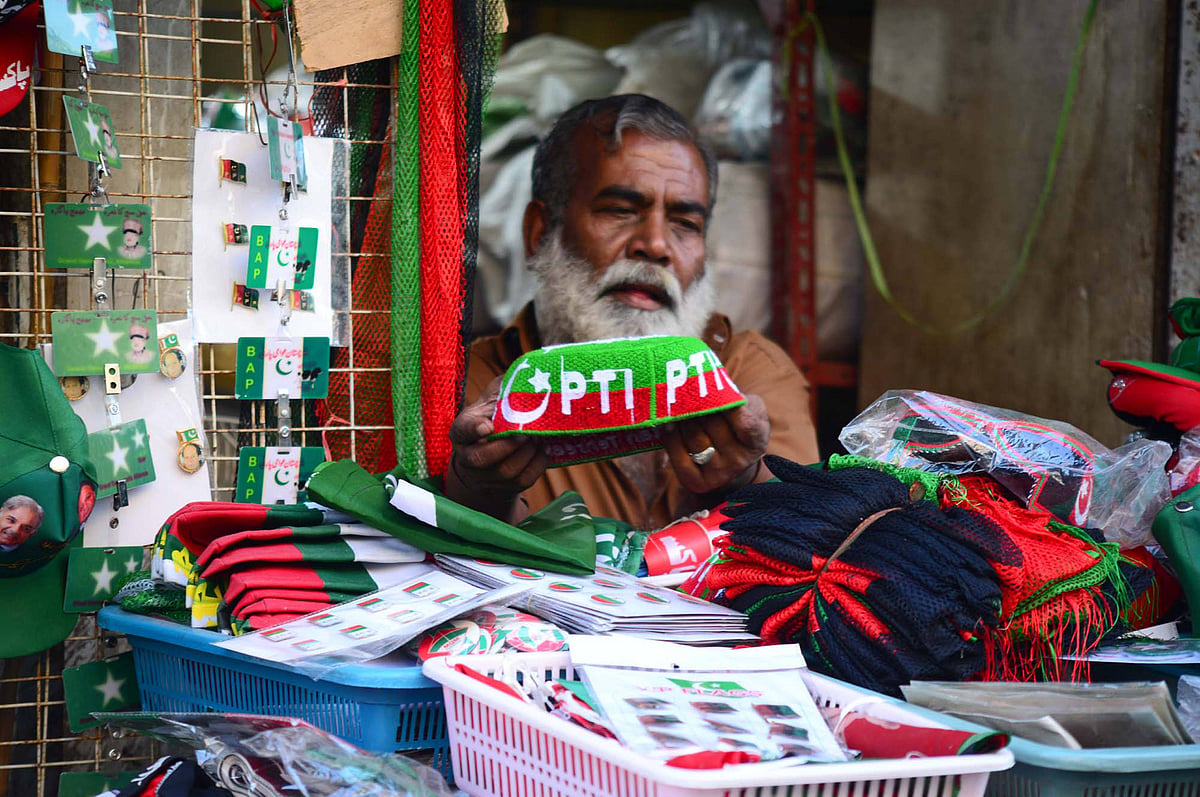
Khan, who continues to enjoy widespread popular support, has been in prison since August 2023. The Supreme Court of Pakistan has also deprived the PTI of its election symbol – a cricket bat – on the grounds that the party did not follow due process in holding internal elections. Many legal experts have criticised the Supreme Court’s decision as being politically motivated, especially because there is no provision in the country’s Election Act stipulating that a party can be deprived of its symbol. Another punishment, like a fine, could have served the purpose if all that was needed was some corrective discipline. Depriving the PTI of its symbol, in a country where voters rely on recognised symbols to pick their preferred parties and candidates, appears to be motivated by a desire to thwart the PTI’s voter base. Candidates who had been affiliated with the PTI will now be forced to contest as independents under different election symbols, causing the PTI to disappear from the ballot as a party.