
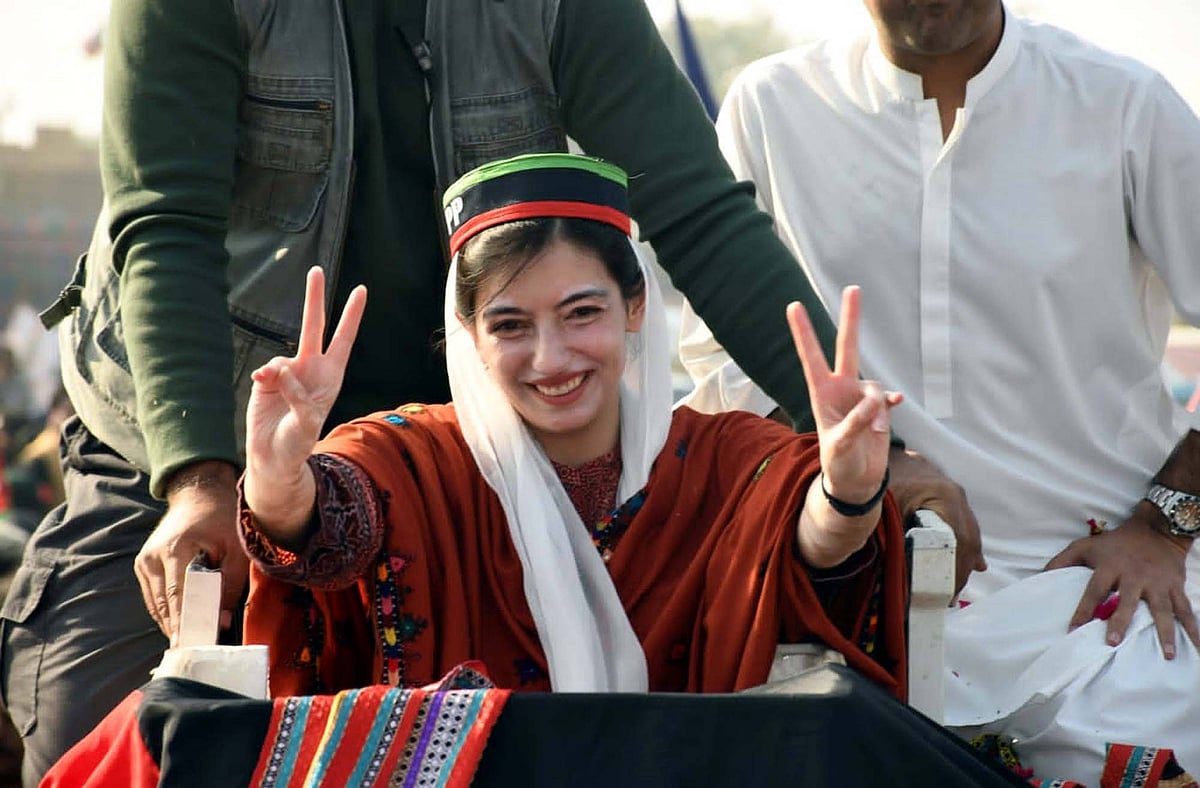
In Pakistan’s last general election, in February 2024, Suriya Bibi became the first woman to be elected to the provincial assembly of Khyber Pakhtunkhwah from Chitral, on the Afghanistan–Pakistan border. She contested the election as an independent candidate with no prior history of contesting elections, though the Pakistan Tehreek-i-Insaaf (PTI), led by the former prime minister Imran Khan, backed her candidacy. She won with almost 19,000 votes, defeating a male candidate of the Jamiat Ulema-e-Islam-Fazl (JUI-F), a party representing the Deobandi brand of Islam, known for its ultra-conservative views on women’s participation in public life. After the election, Suriya Bibi also became the deputy speaker of the provincial assembly.
In contesting the election, Suriya Bibi chose a more difficult route into politics than the one many women in Pakistan have previously taken. That route is nomination, rather than election, to the country’s national assembly and provincial assemblies. As a female candidate, she worked to create a constituency among women voters, and her campaign brought more women out to vote than men for the first time in Khyber Pakhtunkhwah’s history. Along the way, Suriya Bibi dented some of the stereotypes in Pakistan – and beyond – about women’s participation in politics as candidates and as voters. This would not have been possible if she instead sought a nomination to public office.
Suriya Bibi’s victory – with a female newcomer beating out a well-established religio-political rival – was incredibly significant in the male-dominated and conservative sociopolitical context of Pakistan, and especially of Chitral and Khyber Pakhtunkhwah. It is also an exception to the prevailing rule of women getting into politics largely due to prior political connections – often through their families – and so reflects deeper problems in Pakistan’s gendered political landscape.
As of 2023, women constituted more than 48 percent of Pakistan’s total population. Yet the country’s parliament is far from balanced in terms of gender representation. Out of the 336 seats in the national assembly, the country’s directly elected lower house, only 60 are reserved for women. Each party gets to nominate women to these seats in proportion to the share of general (that is, not nominated) seats it wins at the polls. Only 12 women won general seats in 2024, bringing women’s total strength in the house to 72 representatives – just over 21 percent of the total. Pakistan’s six provincial and legislative assemblies have roughly similar proportions of women legislators, and the upper house of parliament has a stipulated minimum of 17 women among its maximum membership of 96 senators.