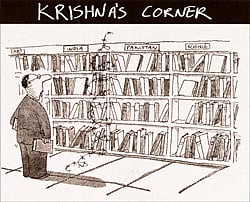
There are periods when the Southasian political milieu gives us hope. One such was the huge popular upsurge and Maoist win for democracy in Nepal. What emerged as a success
At one point, the creation of SAARC was viewed with both optimism and anticipation, for two reasons. First, the organisation provided a forum in which member countries, who otherwise could
Worldwide, greater regional integration is on the upswing. The "intent to challenge global hegemony through constructing regional autonomy", in the words of the New Left intellectual Wang Hui,
In his comparatively recent and strikingly honest book Rescuing the Future: Bequeathed misperceptions in international relations, India's former foreign secretary, Jagat Mehta, points out that no other mainland
Imagine a new Southasia, where borders are transformed into bridges and bonding, where all children go to school, where no one goes to bed hungry, where the human rights of
A serious criticism of SAARC is its non-implementation of decisions taken. The organisation has been criticised variously for being "ritualistic", a "magnificent paper tiger", a "
How exactly does SAARC help the common people of all of the countries of the region? It does not ensure that these countries have standards with regard to education, nutrition,
Southasia is a term that is now in vogue. There are histories of Southasia, there are journalists' associations that style themselves Southasian, there's SAARC, and every time
I was born in the village of Bhadawn, in Azamgarh District of Uttar Pradesh, and also graduated from the local Post-Graduate Degree College. A visit to Bhadawn 27 years after
SAARC, that infelicitous acronym, has many fathers. At least in Bangladesh. The conventional wisdom in Dhaka is that SAARC was the brainchild of the assassinated president Ziaur Rahman. However, Hossain
The SAARC process is currently caught between two forces. One emerges from the urge to define the nation state; the other is a product of globalisation, which contains natural market
At regional meetings, Southasian writers invariably repeat old themes – translate literary works into each other's languages, share common experiences and, most spectacularly, revitalise the common heritage of the