
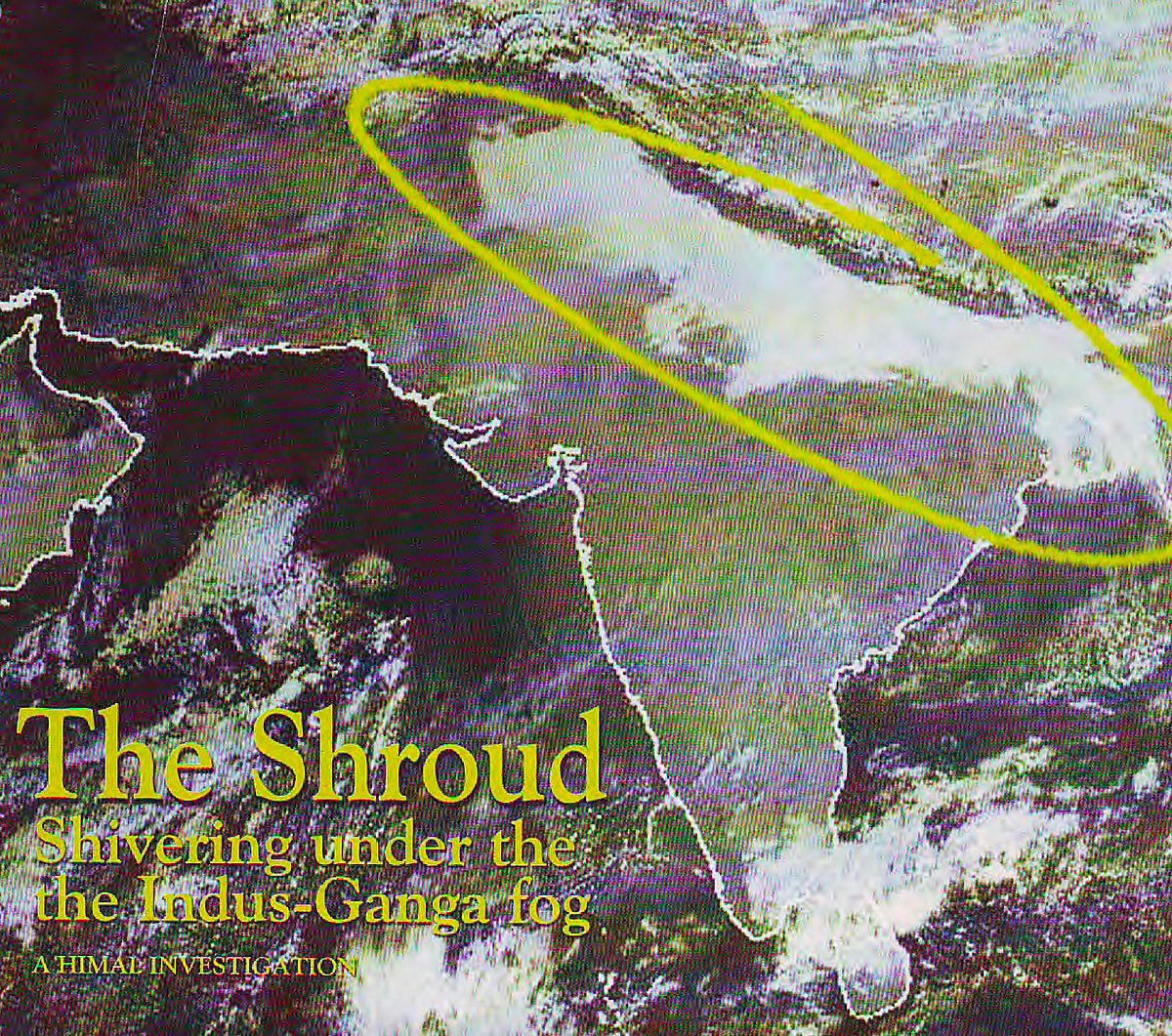
In the winter of 2002-03, a protracted fog hugged the ground of the Indus and Ganga plains in the north and east of the Subcontinent for approximately 45 days. The resultant seet lahar (translated as 'cold wave') of December and January condemned 500 million people, living in a swathe of territory from Rawalpindi to Rangpur, to a sun-starved and frigid existence.
The fog disrupted life beyond just upsetting local airline schedules and delaying trains. In this, one of the most fertile belts of the world – the tropical and semi-tropical northern half of South Asia – lives a large section of global humanity, mostly in poverty. And it was exposed – under-clothed, undernourished – in the millions, to temperatures in the low single digits. The fog and the accompanying cold of the winter just passed struck a bitter blow.
The effects of this winter fog are compounded every year when its growing incidence coincides with the growing numbers of those it shrouds. Yet, as Himal's investigation over the last two months has confirmed, the Indus-Ganga fog is a grossly understudied meteorological phenomenon. This shortcoming is evident when one begins to examine available literature. Meteorological data confirm anecdotal information that the duration and thickness of fog in the Indus-Ganga maidaan has been on the rise over the last half century, yet there is a singular lack of academic concern over its socio-economic impact, and not enough scientific interest in investigating comprehensively the factors behind this increase. While the changing air quality, which appears to have a significant impact, and the inversion layer that now persists for long periods of time preserving cold air at the surface, have received some attention, the rise in ambient moisture – more significant for the plains than in deltaic Bangladesh – as possibly a major cause has been neglected.
The familiar term 'cold wave' does us great disservice in this by implying that the cold comes from elsewhere. Even experienced meteorologists will fob off enquiries by invoking the 'northwesterlies' to explain away the cold as something nothing can be done about. True, the northwesterlies that blow over the land in the winter are cold moist winds that come from elsewhere (as all winds must), but they have always been coming down from that direction and therefore are a constant factor. In fact, the cause for the cold, in the sedentary fog that sits on the Indus and Ganga plains keeping the sun from warming the land and its people, may just be homegrown.