
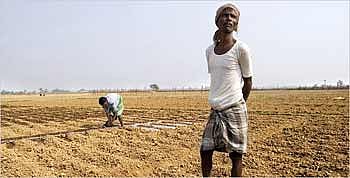
What is now called the Singur controversy was sparked off by the decision of the West Bengal government to acquire 997 acres (affecting approximately 12,000 owners) of agricultural land, which it planned to grant to the Tata Group for the purpose of setting up a small-car factory. This land, which the Calcutta government says Tata chose over five other sites, is located about 40 km outside Calcutta, in the Singur block of Hooghly District. Given the intensity of cultivation and population pressure in West Bengal, the state government has always maintained that it would be difficult for expansion of non-agricultural activities to take place without the incorporation of land currently in use for agriculture. The state government claims, however, that care has been taken to leave fertile, triple-cropped land out of the acquisition process, proof of which can be sought in the irregularly shaped plot currently being offered to the Tata Group.
For the land being acquired, West Bengal's Left Front government has fixed compensation on the following basis: landowners are to receive INR 870,000 per acre for single-cropped land and INR 1,280,000 per acre for double-cropped land; sharecroppers are to receive 25 percent of the value being offered to owners – around INR 200,000-300,000 per acre. In December 2006, the government claimed that 7500 'man-days' of work had been created in the area, to offset some of the employment lost by the decrease in agricultural labour.
In addition, the Left Front (LF) government has put in place a training programme to provide skills to those who wish to seek employment in the Tata factory. According to the government, by early December, 1855 people – 1409 of whose land has been acquired, and 446 of whom are landless agricultural labourers – had enlisted in this government-funded programme. Training for the first batch had already begun in a newly established institute in the area.
For the Left Front government, acquiring land in Singur is a significant departure, as it seeks to change both gear and strategy in an effort to sustain the economic growth that West Bengal has seen over the past three decades. As the state Industries Minister Nirupam Sen put it in a recent interview, land reform, which had secured tenancy rights and was initiated when the LF was elected to power in the state during the late 1970s, was never an end in itself. "After successful land reforms, the decentralisation of Panchayati Raj, and the growth we have achieved in the agrarian sector, if we do not go for industrial development, then the entire economy of the state will go to ruin," Sen noted.