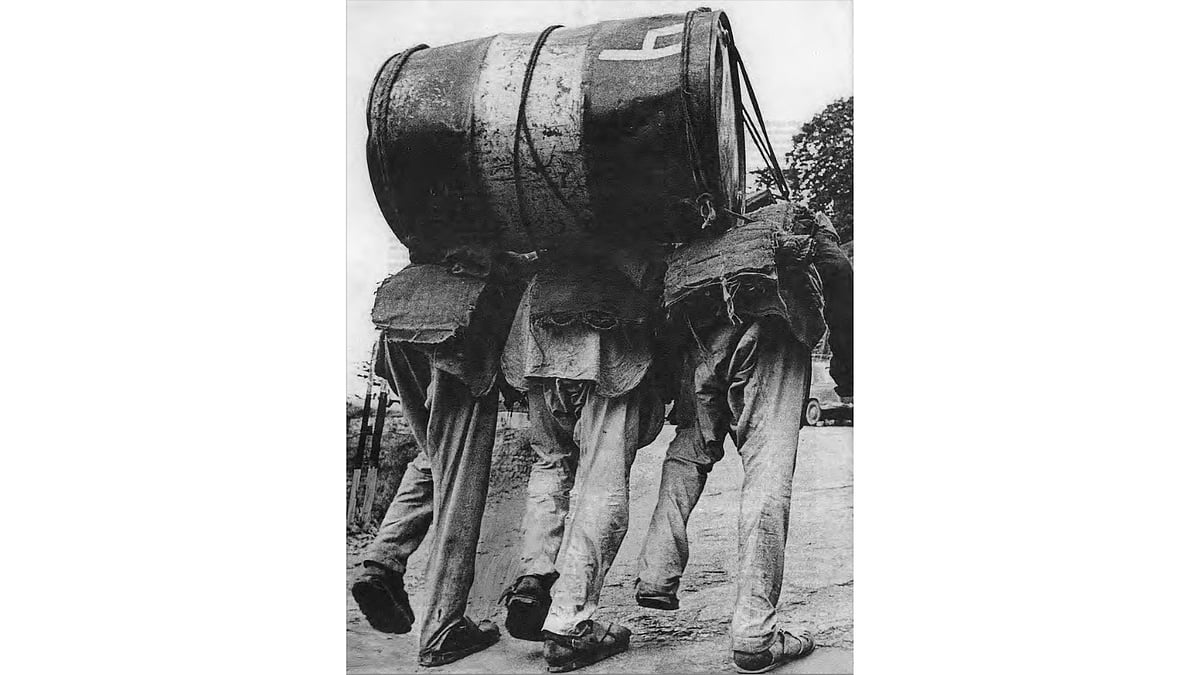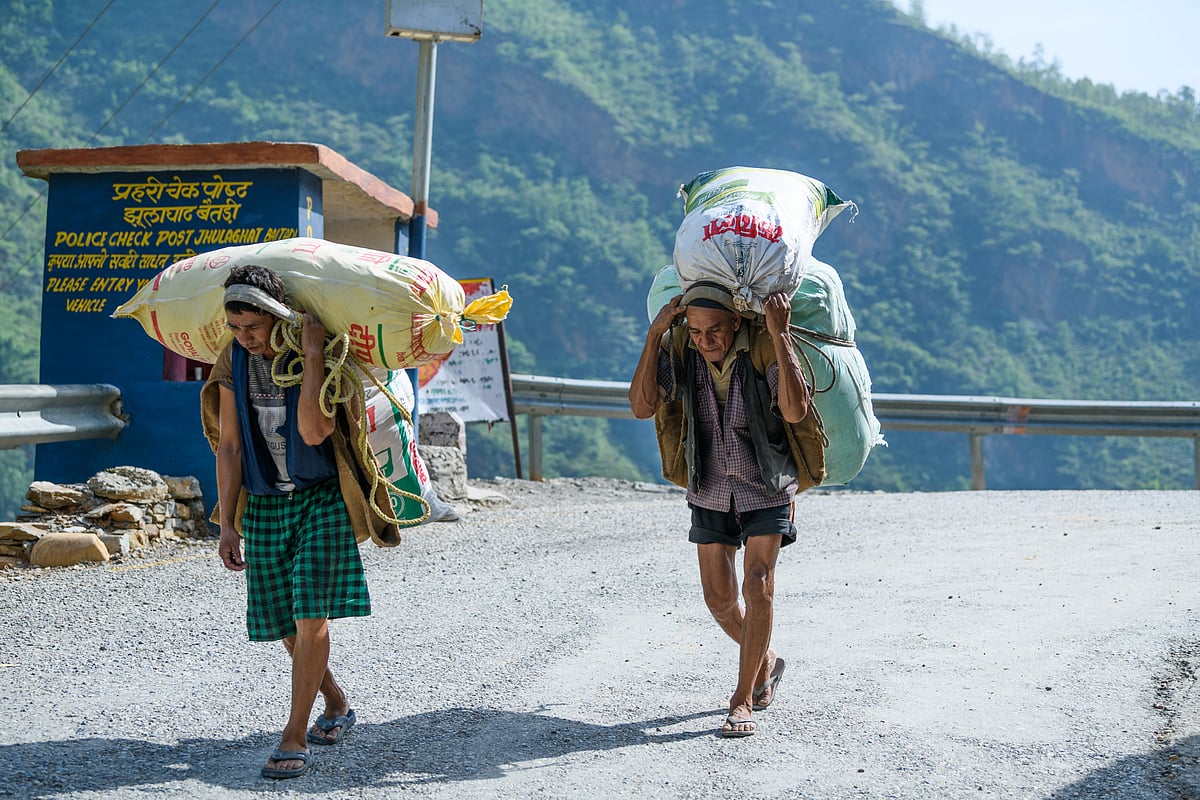
Three ragged labourers, hailing from the hills of far-west Nepal, haul a drum full of truck diesel up from the Lakadi Bazaar depot in Shimla. On the 15 km trail up from the Gaurikund bus stop in Garhwal, a Nepali 'kandiwala' carries his 2000th pilgrim up to Gaumukh, where the Ganga has her source. He earns ninety rupees for the effort. On the Lamjura Pass, the high point on the trail to Khumbu in east Nepal, a 44-year-old Rai man is in the middle of a ten-day haul, with a load that is more than twice his own weight.
Every day, tens of thousands of Nepali porters in the middle hills carry excruciating loads on their spines, for the sahu merchants, for trekkers and mountaineers, and for development agencies. Hundreds of thousands more, heave the basket as part of their daily household chores, fetching water, firewood and fodder.
Carrying goods on the back with the help of a tumpline (namlo) is the most ancient, and taxing, of human labours. While the loads carried by Nepali porters are the heaviest anywhere in the world, the feat is doubly impressive when one considers his diminutive size and body weight. Himalayan back-loading is also distinctive because it is a continuous, unremitting activity, unlike, for example, the stevedore's momentary toil.