Travelogues from colonial and pre-colonial times inevitably have great value as source material for historians. Unfortunately, very few such publications exist on Tibet. The first mention of the 'forbidden
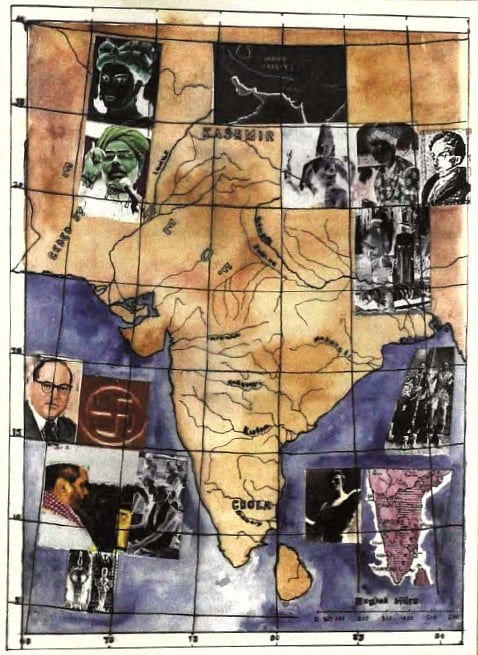
Moving beyond the colonial-era understanding of the history of the Subcontinent gives us a whole new way of looking at the Subcontinent´s past. This now includes not just the usual explorations of politics and economy, but also of social, cultural and religious issues - as well as the writing of his
Instead of accepting the nationalisation of everything through political cartographic boundaries, we can use geographical history to locate current social realities
Touch him, and you will find he is all gone inside
Just like an old mushroom, all wormy inside, and hollow
Under a smooth skin and upright appearance
Full of
On the way to dominating us, the West defined Asia for the Asian and continues to do so in the post-colonial era. But other than a landmass called a continent and given a name, there is nothing that binds 'Asians'.
The development of a regional Southeast Asian identity may not necessarily conform to the 'facts' of geography, history, culture or politics. The notion of Southeast Asia as a homogenous cultural or geographic entity can indeed be overstated. But its social and political identity, derived from the c